
Perioral dermatitis treatment at home can feel overwhelming when you first start looking for answers. The condition appears suddenly. It spreads easily. And it can feel uncomfortable, embarrassing, and confusing. But here is the good news. With the right approach, you can treat perioral dermatitis in a calm, steady, and effective way.
This guide explains everything in simple language. It covers what perioral dermatitis is, what causes it, which treatments work best, and how to build a gentle skincare routine that helps your skin heal.
This article also includes a real-life experience from Lorraine — a woman who battled severe perioral dermatitis and found relief. You can read her full journey here:
👉 Lorraine’s Story: Life Before & After Perioral Dermatitis
What Is Perioral Dermatitis?
Perioral dermatitis is a form of facial inflammation. It appears mainly around the mouth, although it can also affect the nose and eyes. The condition usually shows as:
- Red bumps
- Flaky patches
- A burning sensation
- Tightness
- Dry, irritated skin
- Clusters of small pimples
Although it can look like acne or eczema, it behaves differently. And because of that, perioral dermatitis treatment at home requires a very specific, gentle approach.
What Causes Perioral Dermatitis?
Understanding the causes helps you choose the right treatment for perioral dermatitis.
Below are the most common triggers.
1. Steroid Creams
This is one of the biggest causes.
People often apply steroid creams to reduce redness. However, these creams can make perioral dermatitis much worse in the long run.
When you stop using steroids, the condition often rebounds. This leads to redness, bumps, and irritation.
2. Heavy Moisturisers or Rich Ointments
Thick creams can block pores. They also trap heat and moisture. Therefore, they can worsen inflammation and trigger flare-ups.
3. Harsh Cleansers and Over-Washing
Strong foaming cleansers, exfoliants, or scrubs can break the skin barrier. Once that happens, irritation begins.
4. Fluoride Toothpaste
Some people are very sensitive to fluoride. And because toothpaste touches the skin near your mouth, it can contribute to flare-ups.
5. Hormonal Sensitivity
Shifts in hormones can influence the skin’s response to irritation. This is why many women experience cycles of flare-ups.
6. Weather and Environment
Cold weather, wind, humidity shifts, and air pollution can irritate sensitive skin. This is especially common in Ireland, where damp, chilly weather is the norm.
Symptoms of Perioral Dermatitis

Common symptoms include:
- Redness around the mouth
- Tiny bumps in clusters
- Flaky, dry areas
- Mild burning or stinging
- Sensitivity to products
- Tight or dry skin
- Itching
These symptoms often vary day-to-day. This unpredictability is why choosing the right perioral dermatitis treatment is so important.
How Perioral Dermatitis Is Different from Other Skin Conditions
People often confuse perioral dermatitis with acne, rosacea, or eczema. However, these conditions behave differently.
| Condition | Symptoms | Difference |
|---|---|---|
| Acne | Pimples, whiteheads | Acne appears on cheeks, forehead, back; more oily skin |
| Eczema | Very dry patches | Eczema can appear anywhere; texture is usually rougher |
| Rosacea | Red flushing on cheeks | Rosacea affects central face, not only around mouth |
| Allergic Dermatitis | Sudden redness | Triggered by contact; not always clustered |
Because symptoms overlap, people often choose the wrong treatment. This can make things worse, not better.
What To Do First When You Think You Have Perioral Dermatitis
Before you start looking for the best perioral dermatitis treatment, you should take these first steps:
✔ Stop steroid creams
This is essential.
✔ Avoid heavy moisturisers
These often prolong flare-ups.
✔ Simplify your skincare routine
Use fewer products, not more.
✔ Switch to fragrance-free skincare
Fragrance is a common irritant.
✔ Avoid scrubs and exfoliants
These damage your skin barrier.
✔ Be gentle
Healing takes time. The calmer you are, the faster your skin recovers.
The Best Perioral Dermatitis Treatment at Home Options
Every person is different. However, the most effective treatment for perioral dermatitis usually includes the steps below.
1. A Gentle, Minimalist Skincare Routine
This is the foundation for all perioral dermatitis treatment.
Your routine should include:
- A mild, fragrance-free cleanser
- Lukewarm water
- A light, barrier-supporting moisturiser
- A mineral SPF if your skin tolerates it
This simple routine helps the skin repair itself.
2. Avoiding Triggers
You cannot heal perioral dermatitis if you keep using the same products that caused it.
Avoid:
- Steroid creams
- Fluoride toothpaste (switch if necessary)
- Heavy moisturisers
- Layered skincare routines
- Scented products
- Strong cleansers
Even small changes matter.
3. Supporting the Skin Barrier
A healthy skin barrier means fewer flare-ups.
This is where Bragan Skincare’s Atopic Cream can make a gentle difference.
It helps by:
- Softening dry, irritated skin
- Supporting barrier repair
- Reducing discomfort
- Giving the skin a protected environment to heal
- Hydrating without being heavy
It is not a cure. But it plays a valuable role in a perioral dermatitis skincare routine.
4. Patch Testing and Slow Product Reintroduction
Once your skin starts to settle, you can slowly reintroduce very gentle products.
But always:
- Introduce one product at a time
- Wait at least 2 weeks before adding another
- Stop immediately if irritation begins
Slow and steady wins this race.
How Bragan Skincare Atopic Cream Helps With Perioral Dermatitis Treatment
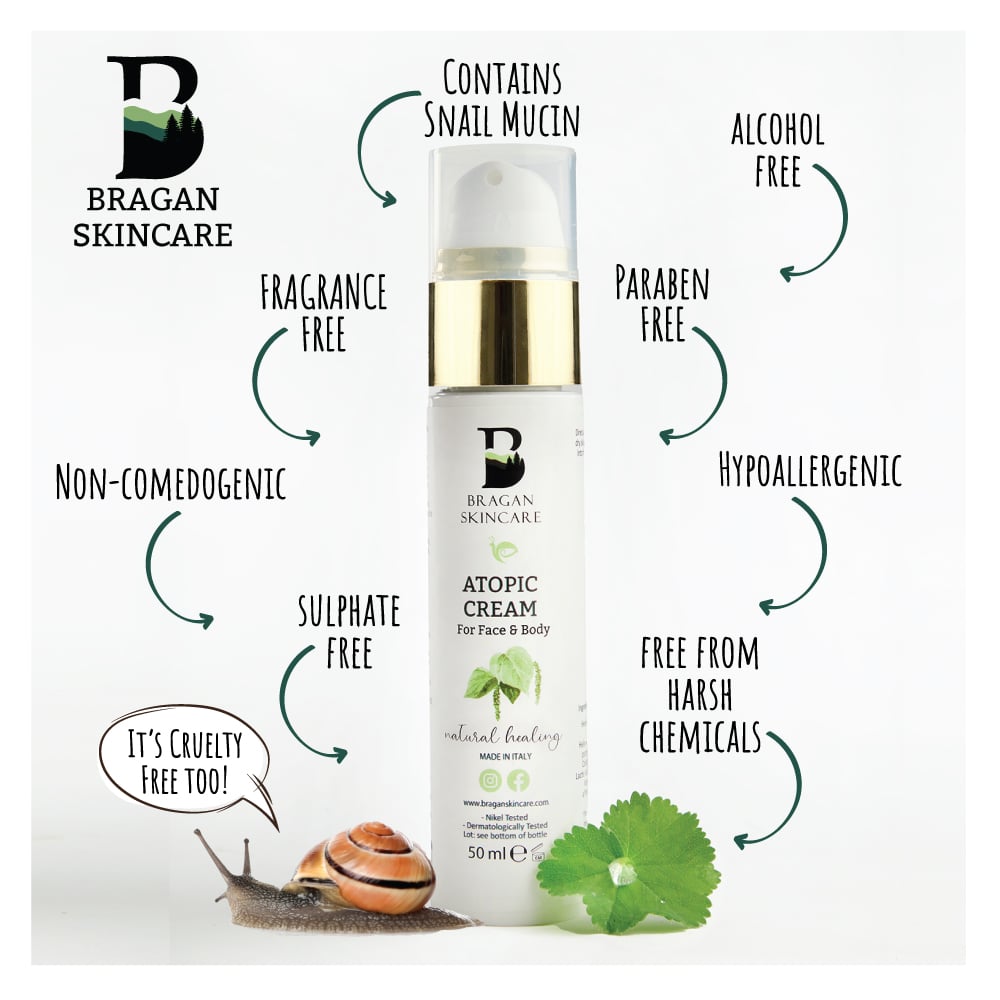
Many customers with sensitive skin use Atopic Cream because it is:
- Extremely gentle
- Fragrance-free
- Lightweight
- Barrier-supporting
- Designed for irritated and inflamed skin
- Suitable for repeated daily use
Because perioral dermatitis is caused by inflammation and barrier breakdown, Atopic Cream fits naturally into a treatment routine.
It supports moisture balance without clogging pores. It soothes discomfort without harsh ingredients. And it reinforces the barrier while your skin heals from within.
A Real Story: Lorraine’s Perioral Dermatitis Treatment Journey
Lorraine battled severe perioral dermatitis for almost a year. She felt embarrassed. She avoided photos. And she tried countless creams. But nothing worked long term.
Eventually, she stripped her routine right back. She stopped steroids. And she used only gentle, supportive products — including our Atopic Cream.
Her skin improved slowly at first. But then it began to heal steadily.
You can read her full story here:
👉 Lorraine’s Story on Bragan Skincare
Her journey shows that patience, barrier support, and simplicity are the heart of effective perioral dermatitis treatment.
How Long Does Perioral Dermatitis Treatment Take?
Treatment time varies greatly. However:
- Mild cases may improve in 2–3 weeks
- Moderate cases often take 6–8 weeks
- Severe cases can take months
And yes — sometimes things get worse before they get better, especially if stopping steroid creams.
Consistency is key.
Daily Habits That Help Soothe Perioral Dermatitis
You can improve results by building good daily habits:
- Use a soft pillowcase
- Avoid licking your lips
- Drink enough water
- Avoid very hot showers
- Reduce stress where possible
- Avoid picking or touching the area
- Use gentle laundry detergents
- Protect your face from wind and cold
Small habits create long-term improvements.
Frequently Asked Questions About Perioral Dermatitis Treatment
Below are some common questions people ask when searching for help.
❓ What is the best perioral dermatitis treatment?
The best treatment is a gentle, minimalist routine combined with barrier support, trigger avoidance, and time. Steroid creams should be stopped unless medically required.
❓ Are natural perioral dermatitis treatments effective?
Some natural treatments help calm the skin. But the safest approach is simple skincare, barrier support, and avoiding irritants.
❓ How do you treat perioral dermatitis quickly?
The fastest route is:
- Stop steroid creams
- Switch to gentle products
- Avoid heavy moisturisers
- Support the barrier with a lightweight cream
- Reduce irritants
Consistency matters more than speed.
❓ Can Bragan Skincare’s Atopic Cream be part of treatment?
Yes. Many customers use it as a gentle, barrier-supporting moisturiser during and after flare-ups.
❓ Does perioral dermatitis go away by itself?
Sometimes. However, most people require a simple, structured skincare routine to prevent it becoming chronic.
❓ Will perioral dermatitis return?
It can return. But with consistent good habits and awareness of triggers, flare-ups often become rare.
Final Thoughts — You Can Treat Perioral Dermatitis at Home Successfully
Perioral dermatitis treatment at home takes time, but healing is possible.
By using gentle products, avoiding triggers, and supporting your skin barrier, you can calm irritation and restore comfort.
Bragan Skincare’s Atopic Cream is a gentle, helpful product in this journey. It supports healing without heaviness and fits perfectly into a simple, effective routine.
And if you ever need hope or encouragement, read Lorraine’s story again. She healed. And so can you.
