
Contact dermatitis on the hands is very common.
In fact, it affects thousands of people every day.
Often, the cause is simple.
Cleaning products.
This is especially common in people who clean regularly at home or work, such as cleaners, healthcare staff, or parents of young children.
Because the skin on the hands is used constantly, it is more exposed.
As a result, it reacts more easily.

Over time, repeated contact with detergents, soaps, and disinfectants can damage the skin barrier.
When that happens, irritation and inflammation can develop.
This can be frustrating.
However, understanding why it happens is the first step toward relief.
To understand the condition in more detail, including different types, common triggers, and long-term management strategies, explore our Contact Dermatitis Hub.
Why Cleaning Products Trigger Hand Dermatitis
Cleaning products are designed to remove grease and dirt.
Unfortunately, they also remove natural oils from the skin.
Because of this, the skin barrier becomes weaker.
Then, moisture escapes more easily.
At the same time, irritants can enter the skin.
Common triggers include:
- Washing-up liquid
- Household sprays
- Bleach and disinfectants
- Hand sanitisers
- Industrial or workplace cleaners
Even mild products can cause problems if exposure is frequent.
This is especially true for people who clean often or wear gloves for long periods.
Common Symptoms on the Hands
Symptoms usually develop gradually.
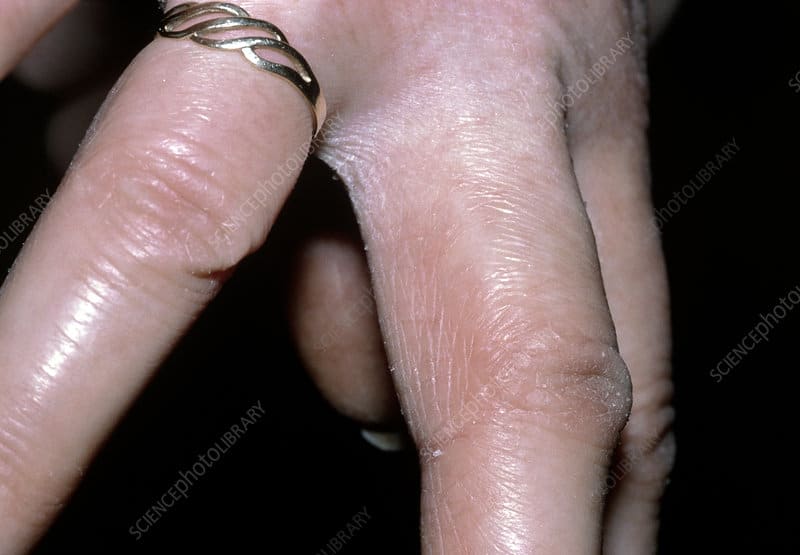
At first, the skin may just feel dry.
However, over time, symptoms can worsen.
Common signs include:
- Redness
- Dry, cracked skin
- Itching or burning
- Soreness
- Flaking or scaling
- Small cracks or fissures
In some people, hand symptoms may include small, itchy blisters rather than dryness alone. This can point to a different condition, such as dyshidrotic eczema, which affects the palms and fingers.
In more severe cases, the skin may split or bleed.
This can make everyday tasks uncomfortable.
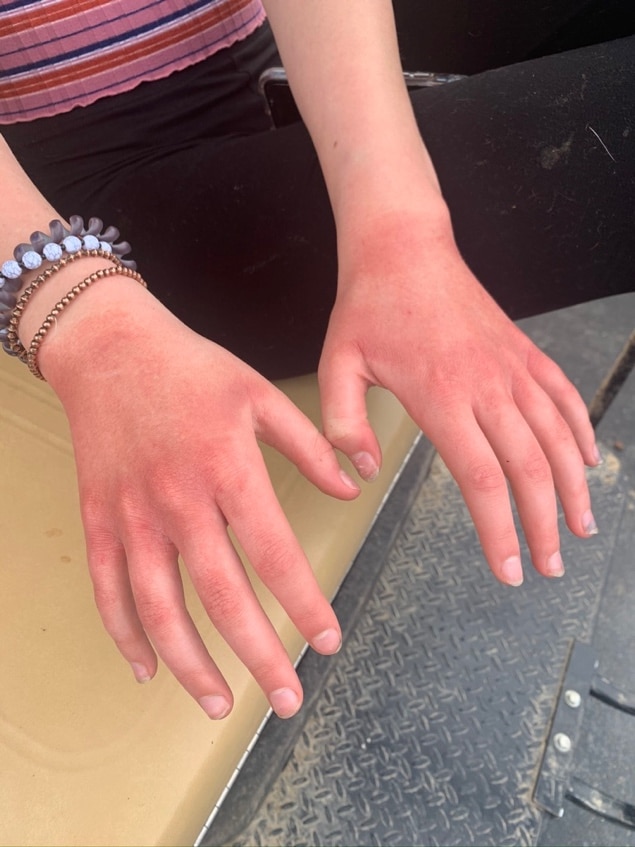
Irritant vs Allergic Contact Dermatitis on Hands
Not all contact dermatitis is the same.
There are two main types.
| Type | What Happens | Example |
|---|---|---|
| Irritant contact dermatitis | Skin is damaged by repeated exposure | Detergents, soaps |
| Allergic contact dermatitis | Immune reaction to a specific substance | Fragrances, preservatives |
Most hand dermatitis from cleaning products is irritant.
However, allergic reactions can also occur.
If symptoms do not improve, further assessment may be needed.
Who Is Most at Risk?
Some people are more likely to develop hand dermatitis.
This includes:
- Cleaners and hospitality workers
- Healthcare staff
- Hairdressers
- Parents of young children
- People who wash hands frequently
- Anyone with eczema or sensitive skin
If you already have a history of eczema, your skin barrier may be weaker.
As a result, irritation develops more easily.
Gentle Care for Contact Dermatitis on Hands
The goal is to protect the skin barrier.
At the same time, irritation should be reduced.
Helpful steps include:
- Using fragrance-free cleaning products
- Wearing protective gloves when cleaning
- Avoiding over-washing
- Rinsing hands thoroughly
- Drying hands gently
In addition, regular moisturising is essential.
This helps support the skin barrier and reduce dryness.
Some people find that gentle, hand creams or barrier products can be helpful as part of their routine.
These are usually applied after washing and before bed.
When to Seek Medical Advice
In some cases, professional advice is important.
You should consider speaking to a healthcare professional if:
- The skin becomes very painful
- Cracks are bleeding or infected
- Symptoms do not improve
- The rash spreads beyond the hands
Patch testing may be recommended if an allergy is suspected.
The HSE website has a great section on the condition.
Frequently Asked Questions
Can cleaning products really cause contact dermatitis on the hands?
Yes. Repeated exposure to detergents, soaps, and disinfectants can damage the skin barrier. Over time, this can lead to irritation and inflammation on the hands.
Is hand dermatitis from cleaning products usually allergic or irritant?
Most cases are irritant contact dermatitis. However, some people may develop an allergic reaction to specific ingredients, such as fragrances or preservatives.
How long does contact dermatitis on the hands take to heal?
Mild cases may improve within a few weeks once triggers are reduced. More severe or ongoing cases can take longer and may need medical advice.
Should I stop cleaning if I have hand dermatitis?
No. Instead, try to reduce direct contact by wearing protective gloves and using gentler, fragrance-free products where possible.
When should I see a doctor about hand dermatitis?
You should seek medical advice if the skin becomes very painful, cracked, infected, or does not improve with basic care.
Key Takeaway
Contact dermatitis on the hands is often caused by cleaning products.
It develops slowly, but it can become persistent.
Using a gentle barrier-supporting cream can help keep the skin hydrated and reduce irritation caused by repeated exposure to cleaning products. Products such as Bragan Skincare’s Atopic Cream are designed to support dry, irritated skin and help restore the natural skin barrier on the hands.