
Contact dermatitis treatment can be challenging. However, it is often manageable.
With the right approach, symptoms can settle. Recovery takes time. But gentle care makes a real difference.
This guide explains how contact dermatitis is treated. It focuses on avoidance, skin barrier support, and recovery. It also explains when further help may be needed.
Start With the Basics
The first step is simple.
Remove what is causing the reaction.
Contact dermatitis improves when exposure stops.
Without removal, treatment is limited.
If you are unsure of the trigger, patterns matter.
Look at what touches the skin daily.
This includes products, work exposure, and routines.
If you want the full picture, including symptoms, diagnosis, and gentle care, see our complete guide to contact dermatitis.
| Gentle Treatment Approach | Why It Helps |
|---|---|
| Fragrance-free products | Reduces irritation and allergic reactions |
| Simple routines | Limits exposure to potential triggers |
| Regular moisturising | Repairs and supports the skin barrier |
| Lukewarm water | Prevents further barrier damage |
| Protective gloves | Reduces contact with irritants |
| What to Avoid | Why It Can Worsen Symptoms |
|---|---|
| Fragranced products | Common trigger for contact dermatitis |
| Over-washing | Strips natural oils |
| Harsh soaps | Damages the skin barrier |
| Scrubbing or exfoliating | Increases inflammation |
| Frequent product switching | Prevents skin recovery |
Avoiding the Trigger Is Key
Avoidance is the most effective treatment.
This may involve:
- Stopping a new product
- Reducing repeated exposure
- Changing work practices
- Using protective measures
Importantly, improvement is not always immediate.
Inflamed skin needs time to recover.
Because of this, patience matters.
Treatment can vary depending on whether contact dermatitis is irritant or allergic. Irritant reactions improve once exposure stops, while allergic reactions often require identifying the specific allergen. This is why patch testing may be recommended in persistent cases.
Support the Skin Barrier
Healthy skin has a strong barrier.
Contact dermatitis damages this barrier.
As a result:
- Moisture escapes
- Irritants enter more easily
- Inflammation increases
Barrier support is essential for healing.
Helpful steps include:
- Using fragrance-free products
- Keeping routines simple
- Avoiding harsh cleansers
- Moisturising regularly
Consistency is key in treating contact dermatitis.

Washing and Cleansing Gently
Over-washing can slow recovery.
It strips natural oils.
To reduce irritation:
- Use lukewarm water
- Limit washing frequency
- Avoid scrubs or exfoliants
- Pat skin dry, do not rub
Gentle cleansing protects healing skin.
Protect the Skin During Daily Tasks
Protection reduces further damage.
This may include:
- Wearing gloves for wet work
- Avoiding prolonged moisture
- Taking breaks from exposure
- Moisturising after contact
However, gloves should not be worn continuously.
Trapped moisture can irritate skin.
Balance is important.

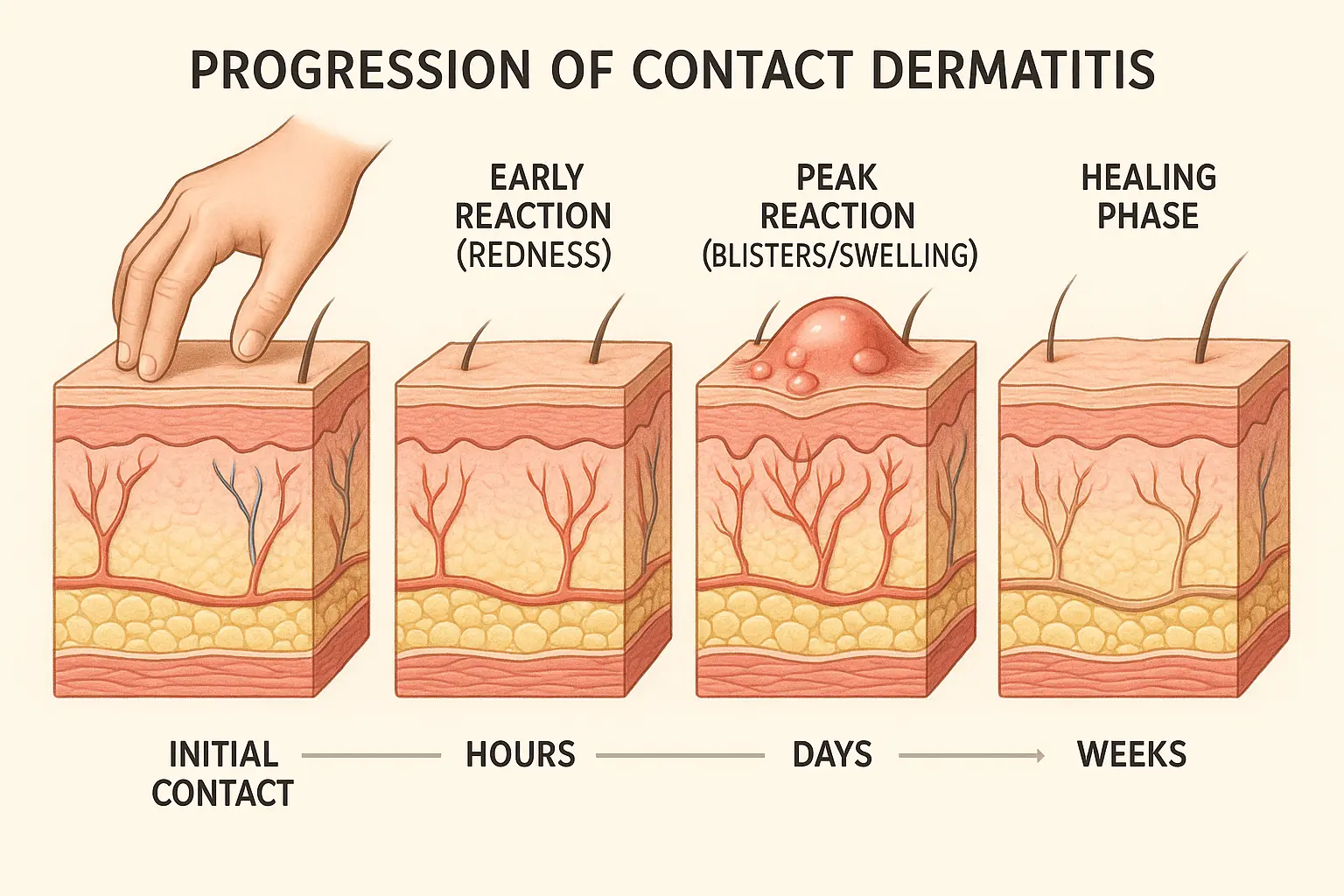
Expect Gradual Improvement
Contact dermatitis rarely clears overnight.
In many cases:
- Redness fades first
- Itching reduces next
- Dryness improves last
Recovery may take days or weeks.
Repeated exposure can delay progress.
Small improvements still count. Slow improvement is normal and does not mean treatment is failing.
When Medical Treatment May Be Needed
Sometimes gentle care is not enough.
Medical advice should be considered if:
- Symptoms persist
- Skin becomes painful
- Weeping or infection appears
- The rash keeps returning
Healthcare professionals may recommend:
- Short-term topical treatments
- Patch testing
- Further investigation
Early support often prevents long-term problems.
Further advice is available from the HSE website here.
Why Contact Dermatitis Can Come Back
Many people ask why it returns.
Common reasons include:
- Ongoing exposure
- Multiple low-level irritants
- Incomplete barrier recovery
Even small triggers can add up.
Consistency is everything in contact dermatitis treatment.
Recovery Is Possible
Contact dermatitis is common.
However, it is often controllable.
By removing triggers and supporting the skin barrier, many people see improvement.
Gentle routines help.
Awareness helps even more.
Recovery is not about doing more.
It is about doing less — consistently.
Frequently Asked Questions About Contact Dermatitis Treatment
How is contact dermatitis treated?
Contact dermatitis is treated by avoiding the trigger, using gentle skincare, and supporting the skin barrier. Most cases improve once the irritant or allergen is removed.
Can contact dermatitis be treated at home?
Yes. Mild to moderate contact dermatitis can often be managed at home with fragrance-free products, regular moisturising, and reduced exposure to irritants.
How long does contact dermatitis take to heal?
Healing time varies. Mild cases may improve within days, while more persistent cases can take several weeks, especially if the skin barrier needs time to recover.
What is the best skincare routine for contact dermatitis?
A simple routine works best. Use gentle, fragrance-free cleansers, moisturise regularly, and avoid unnecessary products that may irritate the skin.
Should I stop using all products during a flare-up?
It may help to temporarily reduce your routine to essential products only. This allows the skin barrier to recover and makes it easier to identify triggers.
When should I seek medical advice for contact dermatitis?
You should seek medical advice if symptoms are severe, painful, infected, affecting the face or eyes, or not improving despite avoiding triggers.
Does contact dermatitis come back after treatment?
It can return if the trigger is reintroduced or if the skin barrier remains weakened. Consistent care and trigger avoidance help reduce repeat flare-ups.