
Fast answer:
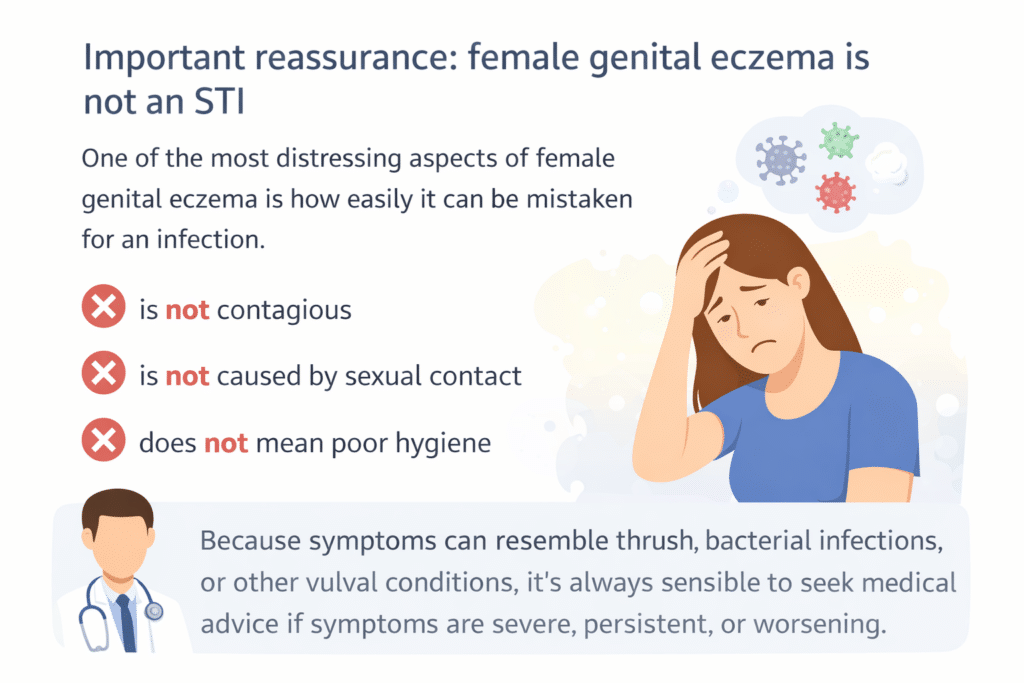
Female genital eczema is a common, non-contagious inflammatory skin condition that affects the delicate external genital skin, most often the vulva. It is not a sexually transmitted infection (STI). Symptoms may include itching, redness, soreness, burning, and dry or cracked skin. While there is no permanent cure, symptoms can usually be managed with gentle skincare, avoidance of irritants, and appropriate treatment.
Female genital eczema is one form of genital eczema, which affects sensitive skin in the genital area and can present differently depending on anatomy and triggers.
As with other types of eczema, symptoms often come and go and are influenced by skin barrier health and environmental triggers.
What is female genital eczema?
Female genital eczema is a form of eczema that affects the external genital skin, particularly the vulva (the outer genital area).
It does not affect the inside of the vagina.
The skin in this area is thinner, more sensitive, and more easily irritated than skin elsewhere on the body. This makes it especially vulnerable to inflammation, dryness, and barrier damage.
Common symptoms of female genital eczema
Symptoms can vary from person to person and may flare up periodically.
Common symptoms include:
- Persistent itching
- Redness or darker discolouration
- Burning or stinging sensations
- Dry, flaky, or scaly skin
- Cracks or soreness
- Pain during intimacy or when sitting
- Increased sensitivity to products or clothing
For some women, symptoms are mild and occasional. For others, they can significantly affect daily comfort and confidence.
In some cases, symptoms may overlap with contact dermatitis, especially when fragranced products or sanitary items trigger irritation.
Genital eczema is often triggered by irritation, barrier damage, or sensitivity to everyday products — you can read more about the most common causes of female genital eczema here.
Because symptoms can be confused with infections, our guide on vulval eczema vs thrush explains the key differences and how to tell them apart.
Why female genital skin is more vulnerable
Female genital skin is uniquely sensitive due to several factors:
- Thinner skin barrier than other body areas
- Natural moisture that increases friction
- Hormonal fluctuations throughout life
- Frequent exposure to products (sanitary items, soaps, wipes)
Because of this, even products tolerated elsewhere on the body may cause irritation in the vulval area.
Common triggers of female genital eczema
| Trigger | Why it causes problems |
|---|---|
| Sanitary pads | Friction + occlusion |
| Fragranced washes | Skin barrier disruption |
| Tight underwear | Heat and moisture build-up |
| Hair removal | Micro-damage to skin |
Triggers differ from person to person, but common ones include:
- Sanitary pads or panty liners
- Tampons
- Tight or synthetic underwear
- Fragranced soaps, washes, or wipes
- Bubble baths and shower gels
- Laundry detergents and fabric softeners
- Shaving, waxing, or hair-removal creams
- Sweat, friction, and prolonged moisture
Avoiding triggers is often just as important as using the right treatment.
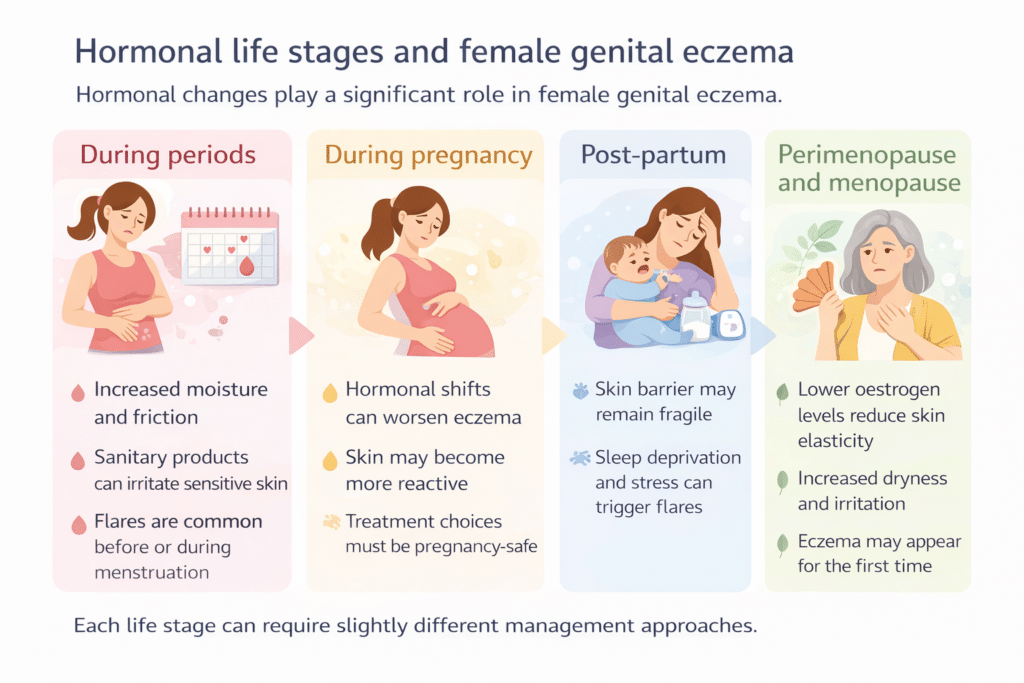
Hormones and female genital eczema
| Life stage | Skin changes | Common issues |
|---|---|---|
| Periods | Increased moisture | Itching, soreness |
| Pregnancy | Barrier sensitivity | Flare-ups |
| Menopause | Reduced oestrogen | Dryness, cracking |
Seborrheic dermatitis can also affect genital skin; for information on seborrheic dermatitis of the penis, see our dedicated guide.
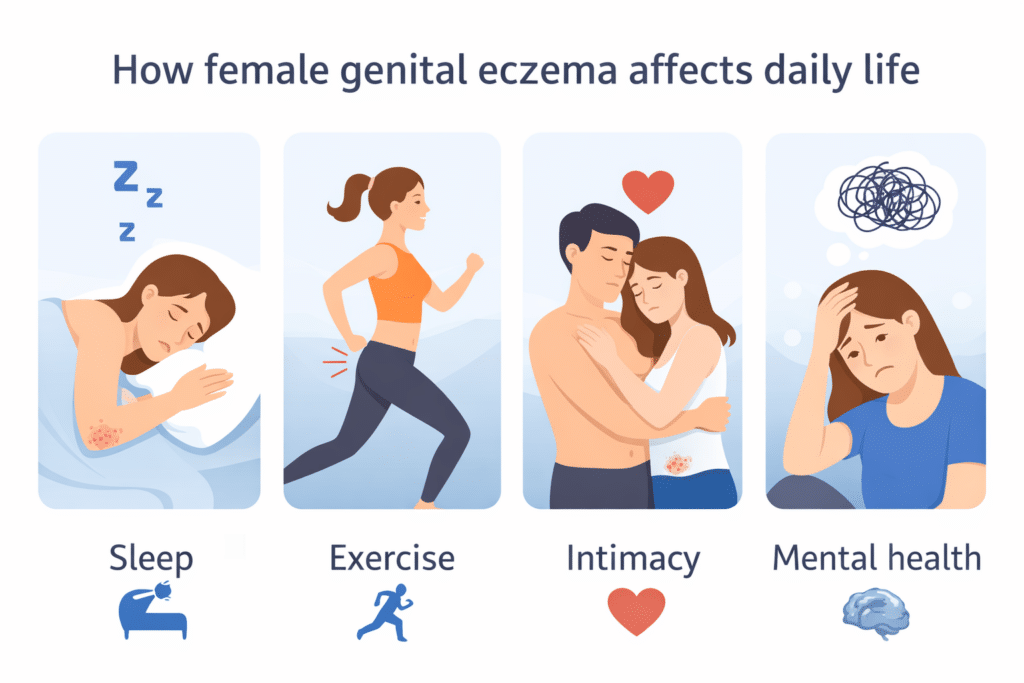
How female genital eczema affects daily life
The condition can impact far more than just the skin.
It may affect:
- Sleep due to night-time itching
- Exercise because of friction and sweat
- Intimacy due to pain, discomfort, or self-consciousness
- Mental wellbeing, including anxiety and low mood
These effects are real, common, and valid — and they deserve proper care and understanding.
Gentle treatment approach for female genital eczema
Treatment focuses on calming inflammation, repairing the skin barrier, and preventing further irritation.
General principles include:
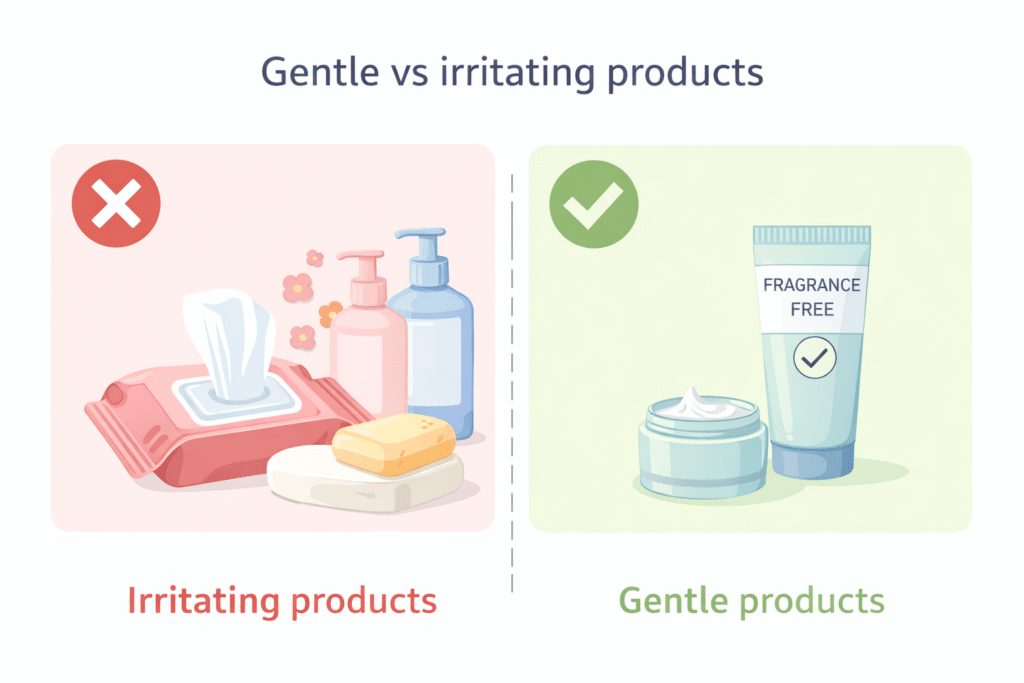
- Avoiding fragranced or harsh products
- Using lukewarm water only
- Wearing loose, breathable underwear
- Applying a gentle, fragrance-free barrier cream
- Using topical steroids only when prescribed, and usually for short periods
A GP or dermatologist can help confirm the diagnosis and recommend appropriate treatment if symptoms persist.
When to seek medical advice
You should seek medical advice if:
- Symptoms are severe or painful
- Skin becomes cracked, oozing, or infected
- There is no improvement after 2–3 weeks of gentle care
- You are unsure whether symptoms could be an infection
- Symptoms occur during pregnancy
Prompt reassurance and guidance can prevent unnecessary discomfort.
For further trusted reading on the subject check out the NHS website.
Frequently asked questions
Is female genital eczema common?
Yes. It is far more common than most people realise, but often under-discussed due to embarrassment.
Can female genital eczema go away?
It is usually a long-term condition that comes and goes. Many people manage it very successfully with the right care.
Is it safe to moisturise the vulval area?
Yes — using the right fragrance-free, gentle emollient is often recommended.
Can stress make it worse?
Yes. Stress is a well-known trigger for many forms of eczema, including genital eczema.
A gentle note on skincare support
Many people with female genital eczema choose to use fragrance-free barrier creams designed for sensitive or eczema-prone skin to support comfort and hydration. These products do not cure eczema, but they can help protect the skin and reduce irritation when used as part of a gentle routine.
Summary: managing female genital eczema with confidence
Female genital eczema is a common, non-infectious skin condition that affects sensitive external genital skin. Although it can be uncomfortable and emotionally distressing, it is manageable. With the right information, gentle skincare, and appropriate medical support when needed, most people are able to regain comfort and confidence.
You are not alone — and help is available.