
Fast answer
Vulval eczema symptoms usually affect the external genital skin and may include itching, burning, redness, dryness, soreness, or cracks in the skin. Symptoms can range from mild to severe and may flare up and settle over time.
This information sits within our wider guide on female genital eczema, which covers causes, diagnosis, and treatment options in more detail.
Common vulval eczema symptoms

Vulval eczema can look and feel different from person to person. Common symptoms include:
- Persistent itching or burning
- Redness or darkened patches of skin
- Dry, flaky, or scaly skin
- Soreness, tenderness, or stinging
- Cracks or splits in the skin
- Increased sensitivity to touch, clothing, or washing
Symptoms may affect one or both sides of the vulva and can vary in intensity from day to day.
If you’re unsure about the difference between vulval and vaginal symptoms, our guide on what vulval eczema is explains this in simple terms.
Where vulval eczema symptoms appear
Vulval eczema only affects the external genital skin. Common areas include:
- The outer labia
- The inner labia
- The skin around the vaginal opening
- The perineum (the area between the vagina and anus)
Eczema does not develop inside the vagina.
Mild vs severe vulval eczema symptoms
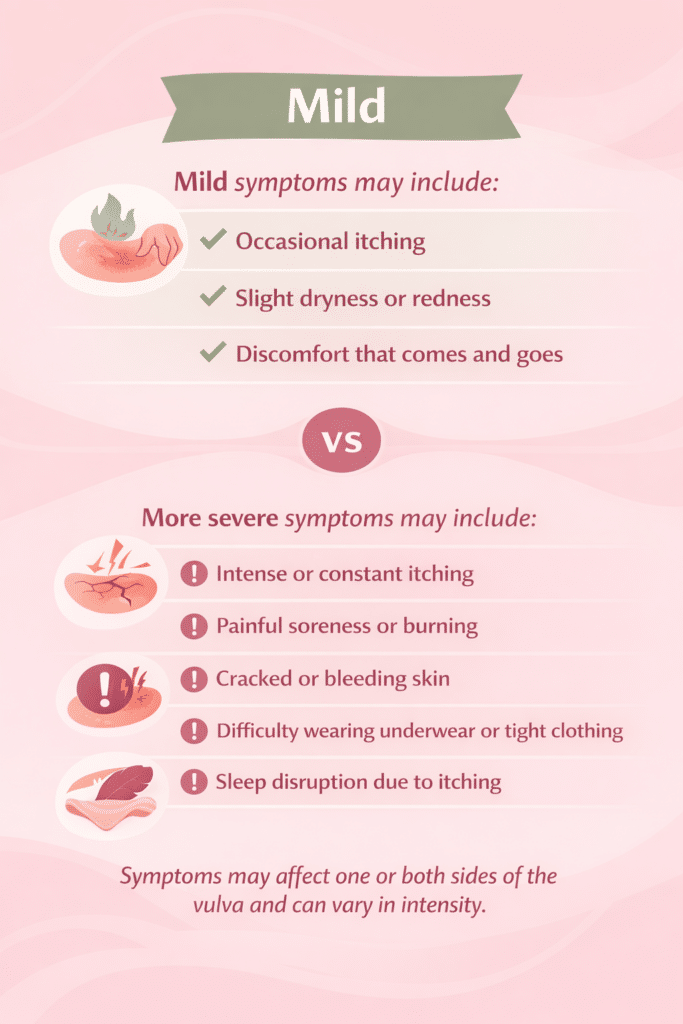
Mild symptoms may include:
- Occasional itching
- Slight dryness or redness
- Discomfort that comes and goes
More severe symptoms may include:
- Intense or constant itching
- Painful soreness or burning
- Cracked or bleeding skin
- Difficulty wearing underwear or tight clothing
- Sleep disruption due to itching
Severe symptoms can significantly affect daily life and emotional wellbeing.
These symptoms are often triggered by irritation or barrier damage. You can learn more in our guide on what causes vulval eczema.(coming soon)
What vulval eczema can look like
Vulval eczema does not always look the same:
- On lighter skin, it may appear red or pink
- On darker skin, it may look darkened, purple, or grey
- The skin may appear shiny, dry, or thickened over time
Scratching often worsens the appearance and irritation.
Vulval eczema symptoms vs thrush
Vulval eczema is often confused with thrush:
- Eczema usually causes dry, irritated skin
- Thrush often involves discharge and internal vaginal symptoms
- Eczema is not caused by infection
If symptoms do not improve or you are unsure, a GP or healthcare professional can confirm the cause.
This topic is covered in more in our Vulval eczema symptoms vs thrush blog coming soon.
When to seek medical advice
You should seek medical advice if:
- Symptoms are severe or getting worse
- There is pain, bleeding, or oozing
- Symptoms do not improve after two to three weeks
- You are unsure whether the condition is eczema or something else
The NHS provides clear guidance on eczema symptoms and when to seek medical advice.
Next step
To understand why these symptoms occur and what triggers flare-ups, visit the main guide on female genital eczema.
FAQs: Vulval eczema symptoms
What are the most common vulval eczema symptoms?
The most common vulval eczema symptoms are itching or burning, redness (or darkened patches on deeper skin tones), dryness or flaking, soreness or stinging, cracks in the skin, and increased sensitivity to touch, clothing, or washing. Symptoms can flare and settle over time.
Can vulval eczema affect one side only?
Yes. Vulval eczema may affect one side of the vulva or both sides. It can also move around slightly between flare-ups, depending on triggers such as friction, sweating, products, or clothing.
What does vulval eczema look like?
Vulval eczema may look red or pink on lighter skin and darker, purple, or grey on darker skin. The skin can appear dry, flaky, irritated, or thickened over time. Scratching often makes the appearance worse.
Is vulval eczema the same as “vaginal eczema”?
In most cases, yes. The term “vaginal eczema” is commonly used, but eczema affects external skin, so symptoms described as vaginal eczema are usually vulval eczema around the vaginal opening. Eczema does not develop inside the vagina itself.
How can I tell vulval eczema from thrush?
Vulval eczema tends to cause dry, irritated external skin with itching, soreness, or cracks. Thrush often involves discharge and internal vaginal symptoms as well as itching. If you’re unsure, a GP can quickly rule out infection and confirm what’s going on.
When should I see a doctor about vulval eczema symptoms?
You should seek medical advice if symptoms are severe, painful, oozing, bleeding, spreading, or not improving after two to three weeks of gentle care. It’s also important to get checked if you’re not sure whether the symptoms are eczema or another condition.