
A contact dermatitis rash is a common skin reaction.
It happens when the skin comes into contact with something that irritates it or triggers an allergic response.
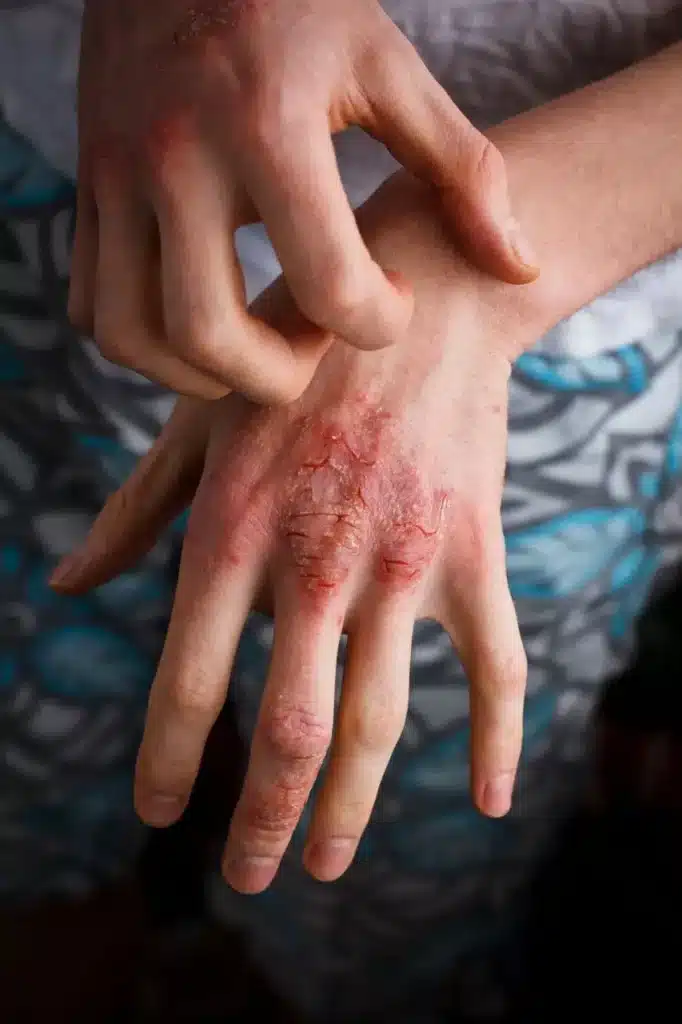
As a result, the skin may become red, itchy, sore, or inflamed.
Although contact dermatitis can be uncomfortable, the condition is usually manageable.
However, understanding what causes it is essential.
Therefore, learning how to protect and support the skin barrier can make a real difference.
Contact dermatitis is also closely linked to eczema, which means it often overlaps with other sensitive skin conditions.
For that reason, it is helpful to understand where contact dermatitis fits within the wider eczema picture.
This page is part of our contact dermatitis guide, which explains causes, symptoms, triggers, and gentle skin care in more detail.
This condition sits within the wider eczema spectrum, which is explained in our complete eczema guide.
What Is Contact Dermatitis?
Contact dermatitis is a form of skin inflammation.
It occurs when the outer layer of the skin reacts to an external substance.
In some cases, the reaction is immediate.
In other cases, symptoms appear hours or even days later.
There are two main types of contact dermatitis:
- Irritant contact dermatitis
- Allergic contact dermatitis
Although both cause similar symptoms, the underlying triggers are different.
Therefore, identifying the cause is a key step in managing flare-ups.
Symptoms of a Contact Dermatitis Rash
Symptoms can vary depending on the trigger and the sensitivity of the skin.
However, most people experience a combination of the following:
- Redness or blotchy skin
- Persistent itching or burning
- Dry, cracked, or flaky patches
- Swelling or tenderness
- Small blisters or weeping skin in more severe cases
Sometimes, symptoms remain localised to one area.
At other times, the rash spreads if exposure continues.
Because scratching can worsen irritation, symptoms may escalate quickly if the skin barrier breaks down.
Common Causes of Contact Dermatitis
Contact dermatitis is caused by direct exposure to a trigger.
These triggers fall into two categories: irritants and allergens.
Common irritants include:
- Soaps and detergents
- Cleaning products
- Hand sanitisers and alcohol-based products
- Prolonged water exposure
Common allergens include:
- Nickel in jewellery or clothing fasteners
- Fragrances in skincare or cosmetics
- Preservatives in personal care products
- Certain plants, such as poison ivy
Because triggers differ from person to person, keeping a symptom diary can help.
As a result, patterns often become easier to spot over time.
You can read more about contact dermatitis on the HSE website.
Contact Dermatitis and Eczema: What’s the Connection?
Contact dermatitis is often described as a type of eczema.
However, it can also occur alongside other eczema forms, such as atopic eczema.
For example, people with eczema usually have a weakened skin barrier.
Therefore, irritants and allergens penetrate the skin more easily.
As a result, contact dermatitis flare-ups are more common in eczema-prone skin.
Understanding this overlap is important.
Because when the skin barrier is protected, both eczema and contact dermatitis symptoms are easier to manage.
Unlike atopic eczema, which is often genetically linked, contact dermatitis is usually triggered by direct exposure. However, both conditions share a weakened skin barrier, which explains why they frequently overlap.
Learn more about the skin barrier here.
Supporting the Skin Barrier Gently
The skin barrier plays a crucial role in protecting against irritation.
When it becomes damaged, moisture escapes and inflammation increases.
Therefore, barrier repair is a central part of managing contact dermatitis.
Helpful strategies include:
- Using fragrance-free cleansers
- Avoiding harsh exfoliants
- Moisturising regularly with barrier-supportive creams
- Washing with lukewarm water instead of hot
Meanwhile, consistency matters more than quantity.
Gentle daily care is often more effective than aggressive treatments.
Why Gentle Ingredients Matter
Sensitive skin reacts easily.
Therefore, ingredient choice is extremely important.
Some naturally supportive ingredients help by:
- Improving hydration
- Supporting skin repair
- Reducing visible redness
- Helping the skin feel calmer
Ingredients such as snail mucin, ceramides, and humectants are often used in sensitive skincare.
Because they focus on repair rather than stripping, they are usually better tolerated.
Preventing Contact Dermatitis Flare-Ups
Prevention is often easier than treatment.
Therefore, small daily habits can significantly reduce flare-ups.
Patch testing new products
Before using a new product, apply a small amount to a discreet area.
Then, wait 24–48 hours to check for irritation.
This simple step can prevent widespread reactions.
Wearing protective clothing
When handling cleaning products or gardening, gloves can help.
However, latex-free options are often safer for sensitive skin.
Reading labels carefully
Fragrance-free does not always mean allergen-free.
Therefore, checking full ingredient lists is important.
When to Seek Medical Advice
In many cases, contact dermatitis improves with avoidance and gentle care.
However, medical advice is important when:
- Symptoms last longer than two weeks
- The rash becomes painful, infected, or widespread
- Sleep or daily life is affected
- Over-the-counter treatments fail
In these situations, a GP or dermatologist may recommend patch testing or prescription treatments. You can read a dermatologist view here.
Living With Contact Dermatitis Long-Term
Managing contact dermatitis is often an ongoing process.
However, with awareness and routine care, flare-ups usually become less frequent.
Because the condition overlaps with eczema, many people benefit from understanding eczema management more broadly.
As a result, recognising triggers, supporting the skin barrier, and choosing gentle products becomes second nature over time.
Complete guide to eczema causes and care
Key Takeaway
A contact dermatitis rash can be frustrating.
However, with the right knowledge and gentle care, symptoms are often manageable.
By understanding triggers and protecting the skin barrier, long-term comfort becomes achievable.
Frequently Asked Questions
Is contact dermatitis a type of eczema?
Contact dermatitis is often grouped under the eczema umbrella. However, unlike atopic eczema, it is usually triggered by direct contact with an irritant or allergen. Because both conditions affect the skin barrier, they can overlap.
How long does a contact dermatitis rash last?
A contact dermatitis rash may improve within a few days once the trigger is removed. However, in some cases, symptoms can last one to three weeks. Healing time depends on skin sensitivity and how quickly the skin barrier recovers.
Can contact dermatitis keep coming back?
Yes, contact dermatitis can recur if the skin is repeatedly exposed to the same trigger. Because some irritants are found in everyday products, flare-ups may happen without obvious warning. Identifying triggers is therefore essential for long-term control.
Does contact dermatitis damage the skin barrier?
Contact dermatitis can weaken the skin barrier, especially during repeated flare-ups. As a result, the skin may lose moisture more easily and become more reactive. Supporting barrier repair helps reduce sensitivity over time.