
Contact dermatitis triggers explain why skin reactions do not happen at random.
Contact dermatitis develops when the skin reacts to something it touches. That reaction may build up over time. Or it may happen after repeated exposure.
Understanding common triggers is important. Because avoiding them can help reduce flare-ups.
This guide explains the most common causes of contact dermatitis. It also outlines simple ways to protect your skin.
A reaction does not mean a product is ‘bad.’ It simply may not suit your skin.
What Are Contact Dermatitis Triggers?
When the skin reacts to a trigger, symptoms can vary. They may appear gradually or develop after repeated exposure.
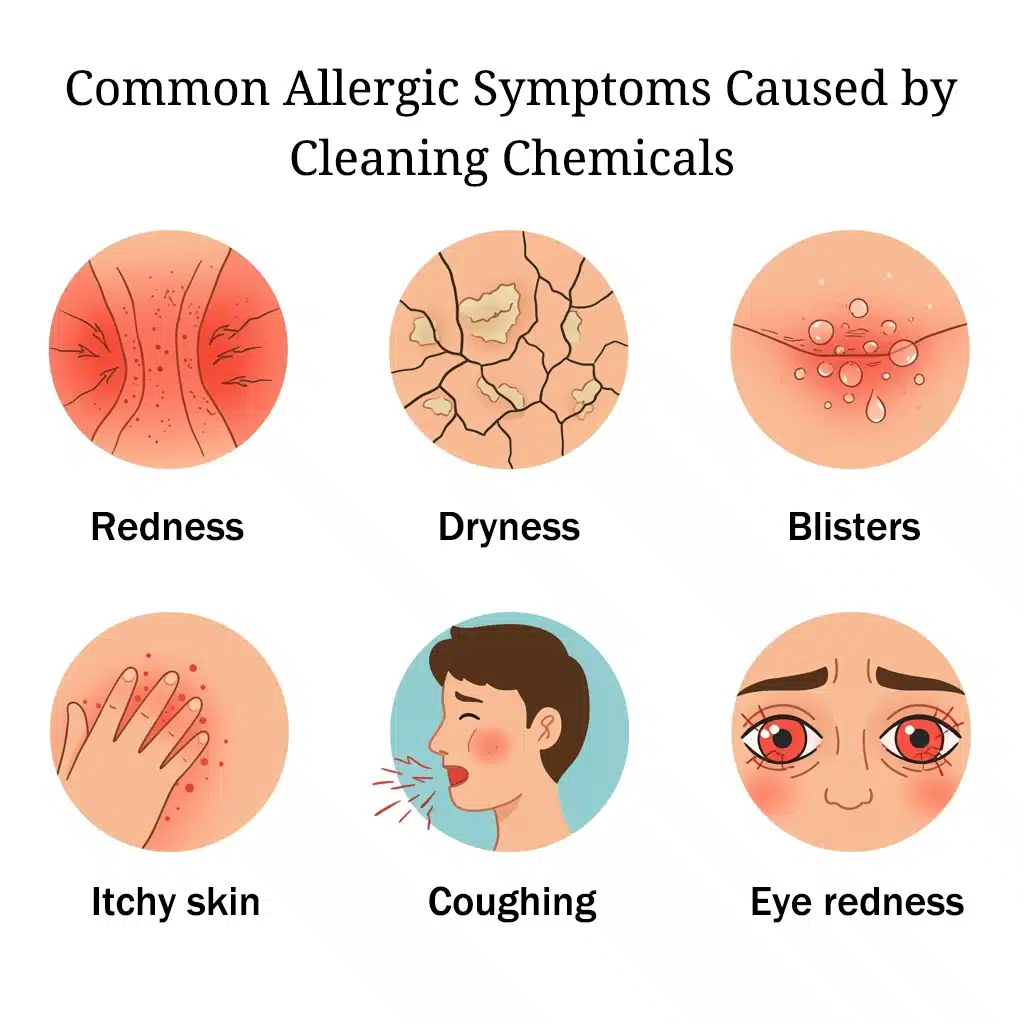
Common signs of a trigger-related reaction include:
- Redness
- Itching
- Dry or flaky skin
- Burning or stinging
- Cracking or soreness
A trigger is anything that causes the skin to react.
For contact dermatitis, triggers usually fall into two groups:
- Irritants
- Allergens
Both can damage the skin barrier. Both can lead to redness, itching, and discomfort.
Irritant Triggers (The Most Common Cause)
Irritants damage the skin directly. They do not involve the immune system.
The effect often builds slowly. Repeated contact increases the risk.
Common irritant triggers include:
- Soaps and body washes
- Cleaning products
- Washing-up liquid
- Alcohol-based hand sanitisers
- Frequent hand washing
- Sweat and prolonged moisture
- Friction from clothing or gloves
Hands are especially vulnerable. They are exposed and washed often.
Allergic Triggers (Immune-Related Reactions)
Allergic triggers work differently.
Here, the immune system reacts to a specific substance. The reaction is often delayed.
Symptoms may appear hours or days later. This can make the trigger harder to identify.
Common allergic triggers include:
- Fragrances
- Preservatives
- Nickel
- Latex
- Certain plants
- Hair dyes and cosmetics
Once sensitised, the skin may react again. Even small amounts can cause symptoms.
If symptoms appear the next day or two, an allergic trigger is more likely.
Everyday Products That Can Trigger Reactions
Many triggers are part of daily life. This is why contact dermatitis is so common.
Problem products may include:
- Household cleaners
- Laundry detergents
- Fabric softeners
- Skincare products
- Shampoos and conditioners
- Wet wipes
A reaction does not mean a product is “bad.” It simply may not suit your skin.
Workplace and Environmental Triggers
Some triggers are linked to work or surroundings.
Examples include:
- Cleaning chemicals
- Oils and solvents
- Cement and dust
- Gloves and protective equipment
- Cold or wet environments
People in healthcare, cleaning, construction, and hairdressing are often affected. However, anyone can develop work-related contact dermatitis.
Why Triggers Are Not Always Obvious
Triggers are not always easy to spot.
This is because:
- Reactions may be delayed
- Exposure may be repeated
- More than one trigger may be involved
Skin can also become more sensitive over time. A product that was once tolerated may later cause irritation.
How to Reduce Exposure to Triggers
Avoidance is key. But small changes can make a big difference.
Helpful steps include:
- Limiting contact with harsh products
- Reducing repeated washing
- Using gentle alternatives
- Wearing protective gloves when needed
- Keeping skin clean and dry
- Allowing the skin barrier time to recover
Consistency matters. Skin improvement often takes time.

When to Seek Further Advice
Sometimes triggers are unclear. Or symptoms may keep returning.
You may want professional advice if:
- Reactions do not settle
- Symptoms worsen
- The trigger cannot be identified
- Skin becomes painful or infected
Early support can help protect the skin barrier. It can also prevent long-term problems.
You can also read more on the HSE website here.
Frequently Asked Questions: Contact Dermatitis Triggers
What are the most common triggers of contact dermatitis? The most common triggers are everyday irritants such as soaps, detergents, cleaning products, and frequent hand washing. Allergens like fragrances, preservatives, nickel, and latex can also trigger reactions.
Can contact dermatitis be caused by everyday products? Yes. Many cases are caused by products used daily, including household cleaners, laundry detergents, skincare products, shampoos, and wet wipes.
What is the difference between an irritant and an allergic trigger? Irritant triggers damage the skin barrier directly and often build up over time. Allergic triggers involve the immune system and usually cause a delayed reaction after contact.
Why can it be hard to identify a trigger? Triggers can be difficult to identify because reactions may be delayed, exposure may be repeated, or more than one trigger may be involved at the same time.
Can work or the environment trigger contact dermatitis? Yes. Contact with chemicals, oils, gloves, dust, or wet conditions at work can trigger contact dermatitis, especially in jobs involving frequent hand exposure.
How can I reduce exposure to contact dermatitis triggers? Reducing exposure involves limiting contact with harsh products, avoiding known allergens, protecting the skin, and allowing time for the skin barrier to recover.
For ongoing skin support after exposure to common irritants, explore Bragan Skincare’s Atopic Cream, formulated to help soothe and protect sensitive skin.
Final Takeaway
Contact dermatitis usually has a cause. That cause is often something the skin touches repeatedly.
By identifying common triggers, you can:
- Reduce flare-ups
- Protect the skin barrier
- Support long-term skin comfort
Small changes matter. And awareness is the first step.