
Small, itchy blisters on the feet are a common sign of dyshidrotic eczema. Although uncomfortable, flare-ups are usually manageable with the right care.
Living with dyshidrotic eczema on the feet can be frustrating. Small, itchy blisters can interfere with everyday tasks and often flare without warning.
This guide focuses specifically on dyshidrotic eczema affecting the feet. It explains what it looks like, why it happens, and what can make symptoms better or worse. For a full overview of dyshidrotic eczema — including causes, treatment options, and long-term care — see our main dyshidrotic eczema guide.

What is Dyshidrotic Eczema?
Dyshidrotic eczema, also known as pompholyx, is a chronic skin condition. It primarily affects the hands and feet, causing small, fluid-filled blisters and intense itching. People aged 20 to 40 are most commonly affected, although it can occur at any age.
This condition can strike suddenly and may persist for weeks. Flare-ups often disrupt daily activities, making even simple tasks like gripping a pen or preparing food painful.
Dyshidrotic eczema is recognised by dermatology organisations as a distinct form of eczema affecting the hands and feet.
Symptoms and Appearance
| Feature | Dyshidrotic Eczema |
|---|---|
| Appearance | Small fluid-filled blisters |
| Location | Soles of feet and between toes |
| Contagious | No |
| Pattern | Flare-ups and calm periods |
Identifying dyshidrotic eczema on feet is straightforward once you know what to look for. Common signs include:
- Small, itchy blisters filled with clear fluid.
- Dry or scaly skin once the blisters heal.
- Severe itching, often worsening at night.
These blisters tend to appear on the soles of the feet, along the edges, or between the toes.
Some people describe the blisters as feeling deep under the skin before they appear. The feet may feel hot, prickly, or irritated before visible symptoms develop, especially during flare-ups.
Underlying Causes and Triggers
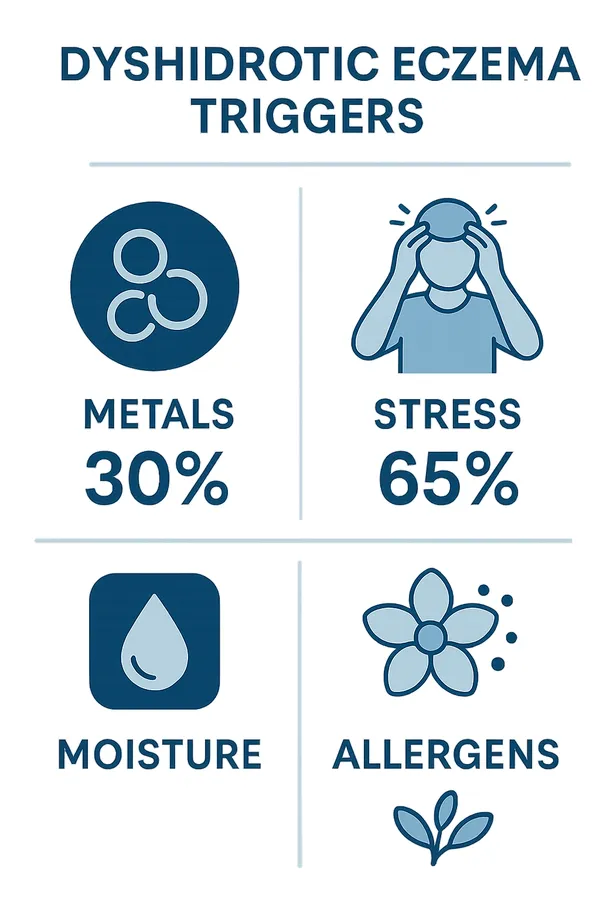
The exact cause isn’t always clear, but some major triggers include:
- Stress and anxiety.
- Seasonal allergies.
- Prolonged exposure to water or irritants like detergents.
- Sensitivity to metals such as nickel or cobalt.
- Warm, enclosed footwear or non-breathable shoes
Understanding your triggers is the first step in effectively managing this condition.
Managing Dyshidrotic Eczema on Feet

There is no single cure for dyshidrotic eczema on feet, so care usually focuses on ongoing management. This often means reducing irritation, supporting healing during flare-ups, and protecting the skin barrier day to day.
Importance of Moisturisation
Keeping the skin hydrated is crucial. When you have eczema, your skin’s natural barrier is often damaged, leading to increased dryness and irritation. Using a cream designed for eczema, like Atopic Cream, can restore lost moisture and rebuild the skin’s protective barrier.
Snail Mucin as a Treatment
Snail mucin might sound unusual, but it has been used for centuries to heal skin conditions. This natural ingredient is packed with beneficial components such as glycoproteins, hyaluronic acid, and antioxidants.
- Hyaluronic Acid: Provides deep hydration by retaining moisture.
- Glycoproteins: Help repair and strengthen the skin.
- Antioxidants: Reduce inflammation and promote healing.
Choosing Gentle, Eczema-Safe Products
Unlike many general moisturisers, eczema-safe products are usually formulated to support the skin barrier without fragrance or harsh ingredients, making them better suited to sensitive, inflamed skin.
Practical Tips for Managing Dyshidrotic Eczema
Beyond treatments, small lifestyle changes can go a long way in reducing symptoms.
Avoiding Common Triggers
Prevention starts by eliminating environmental triggers:
- Wear gloves while cleaning or doing dishes.
- Switch to hypoallergenic soap and laundry detergents.
- Avoid exposure to known allergens, such as nickel jewellery.
Home Remedies and Precautions
Simple home remedies can provide immediate relief:
- Use cold compresses to soothe itching.
- Apply an anti-itching cream after washing your feet.
- Avoid scrubbing your feet to prevent further irritation.
Preventing Flare-Ups
Chronic conditions like dyshidrotic eczema on feet require ongoing care to minimise flare-ups.
Diet and Lifestyle Changes
Simple adjustments can make a noticeable difference.
- Reduce caffeinated drinks and processed foods, which may worsen inflammation.
- Manage stress through breathing exercises or yoga.
- Stay hydrated to help your skin heal faster.
Before you worry
- Dyshidrotic eczema is common
- It is not caused by poor hygiene
- It is not contagious
- Many people manage flare-ups successfully over time
Frequently Asked Questions About Dyshidrotic Eczema on Feet
What does dyshidrotic eczema on the feet look like?
Dyshidrotic eczema on the feet usually appears as small, fluid-filled blisters on the soles, toes, or sides of the feet. The skin may feel itchy, tight, or sore. As the blisters heal, the skin can become dry, cracked, or flaky.
Is dyshidrotic eczema on the feet contagious?
No. Dyshidrotic eczema is not contagious. It cannot be passed from person to person through touch, shared items, or close contact.
What commonly triggers dyshidrotic eczema on the feet?
Triggers vary from person to person. Common triggers include stress, frequent hand washing, exposure to detergents or cleaning products, sweating, seasonal allergies, and sensitivity to metals such as nickel.
How long does a dyshidrotic eczema flare on the feet last?
A flare can last anywhere from a few days to several weeks. Blisters often dry out and peel as they heal. Ongoing skin care and avoiding triggers may help reduce how often flares occur.
Can dyshidrotic eczema affect only one foot?
Yes. Dyshidrotic eczema can sometimes affect one foot more than the other, especially if one foot is exposed to irritants more frequently. Over time, symptoms may spread to both feet.
Is dyshidrotic eczema on the feet the same as a fungal infection?
No. While the blisters and peeling can look similar, dyshidrotic eczema is inflammatory, not infectious. Fungal infections often worsen with moisture and usually respond to antifungal treatments, whereas dyshidrotic eczema does not.
Should I see a doctor for dyshidrotic eczema on my feet?
You should consider seeing a healthcare professional if symptoms are severe, painful, spreading, infected, or not improving. A doctor can help confirm the diagnosis and rule out other skin conditions.
Conclusion: Dyshidrotic eczema on feet
Dyshidrotic eczema on the feet can be uncomfortable and frustrating, especially when flare-ups affect everyday activities. Although symptoms may come and go, many people find that understanding their triggers and caring for the skin consistently helps reduce how often flares occur and how severe they feel.
If symptoms on the feet keep returning or seem to be part of a wider pattern, learning more about dyshidrotic eczema as a whole can be helpful. Our main guide explains the condition in more detail, including common causes, triggers, and long-term management options.
Last edited 10/01/2025