
Living with dyshidrotic eczema can feel unpredictable.
Flare-ups often appear suddenly, even when the skin seemed calm just days before.
Many people ask the same question:
“Why does my dyshidrotic eczema keep coming back?”
In most cases, flare-ups are linked to specific triggers rather than a single cause.
Understanding these triggers is one of the most effective ways to reduce how often symptoms appear and how severe they become.
This guide explains the most common dyshidrotic eczema triggers, why they matter, and what you can do to reduce their impact.

What Are Dyshidrotic Eczema Triggers?
Triggers are factors that can set off or worsen inflammation in people prone to dyshidrotic eczema. They do not cause the condition itself. Instead, they push already-sensitive skin into a flare. To understand the condition in full, see our dyshidrotic eczema hub. Triggers vary from person to person, and many people experience more than one trigger at the same time.
Common Dyshidrotic Eczema Triggers at a Glance
| Trigger | How It Affects the Skin |
|---|---|
| Stress | Increases inflammation and itching |
| Sweating & heat | Traps moisture and irritates skin |
| Metal sensitivity | Triggers immune reactions |
| Irritants | Weakens the skin barrier |
| Seasonal changes | Dries or inflames the skin |
| Prolonged moisture | Softens skin and increases blistering |
Stress and Emotional Triggers
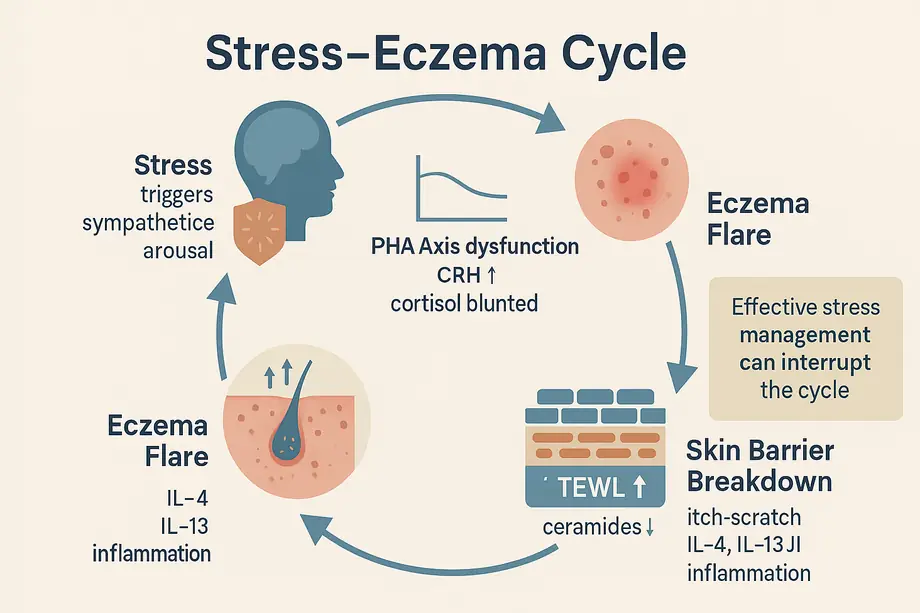
Stress is one of the most commonly reported triggers.
When the body is under stress:
- Inflammatory chemicals increase
- The skin barrier becomes weaker
- Itching sensations intensify
Many people notice flare-ups:
- During busy or anxious periods
- After poor sleep
- Following emotional strain
Reducing stress does not cure dyshidrotic eczema, but it can lower flare frequency and severity over time.
Sweating and Heat
Heat and sweating are major triggers, especially during warmer months.
Sweat:
- Softens the outer skin layer
- Traps heat and moisture
- Makes blistering more likely
This is particularly relevant for:
- Hands wearing gloves
- Feet in warm, enclosed footwear
- Prolonged physical activity
Keeping skin cool and dry can significantly reduce irritation during flare-prone periods.
Metal Sensitivity (Nickel and Cobalt)
Some people with dyshidrotic eczema are sensitive to certain metals.
Common culprits include:
- Nickel
- Cobalt
Exposure may come from:
- Jewellery
- Coins
- Metal tools
- Certain foods (in sensitive individuals)
In people with metal sensitivity, contact or internal exposure can trigger blister formation, especially on the hands and feet.
Dermatology organisations recognise stress, sweating, and metal sensitivity as common triggers for dyshidrotic eczema.
Irritants and Chemical Exposure
Everyday irritants can quietly damage the skin barrier.
Common irritants include:
- Soaps and detergents
- Cleaning products
- Fragranced skincare
- Alcohol-based products
Repeated exposure:
- Strips natural oils
- Weakens the protective barrier
- Makes skin more reactive to other triggers
Gentle, fragrance-free products are usually better tolerated during flare-prone periods.
Seasonal and Environmental Triggers
Many people notice seasonal patterns in their flare-ups.
Examples include:
- Winter dryness worsening cracking and peeling
- Summer heat increasing sweating and blistering
- Sudden temperature changes irritating sensitive skin
Environmental factors do not act alone, but they often combine with other triggers to push skin into a flare.
Prolonged Moisture and Occlusion
Keeping skin wet for long periods can worsen symptoms.
Examples include:
- Frequent hand washing without proper drying
- Damp socks or footwear
- Occlusive gloves worn for long periods
Prolonged moisture:
- Softens the skin
- Increases friction
- Makes blistering more likely
Allowing skin to dry properly and using breathable materials can help reduce this risk.
| Trigger | Hands | Feet |
|---|---|---|
| Stress | ✔ Common | ✔ Common |
| Sweating | ✔ Gloves | ✔ Shoes |
| Metal Sensitivity | ✔ Jewellery / tools | ✔ Shoe components |
| Moisture | ✔ Frequent washing | ✔ Damp footwear |
🔍 Dyshidrotic Eczema Snapshot
What triggers flare-ups most often?
- Stress and emotional strain
- Sweating and heat
- Metal sensitivity
- Irritants and harsh products
- Prolonged moisture
Important to remember
- Triggers differ between people
- Flare-ups often have more than one trigger
- Identifying patterns takes time
How to Reduce Dyshidrotic Eczema Triggers
While triggers cannot always be avoided completely, small adjustments can help reduce their impact.
Helpful steps often include:
- Keeping skin well moisturised
- Avoiding harsh or fragranced products
- Wearing breathable gloves and footwear
- Managing stress where possible
- Noticing patterns before flare-ups occur
Consistency matters more than perfection.
When Triggers Affect Hands and Feet Together
Some triggers, such as stress or metal sensitivity, can affect both hands and feet at the same time.
If symptoms regularly appear in both areas, it may help to:
- Review triggers globally rather than by body area
- Read our guides on dyshidrotic eczema on hands and dyshidrotic eczema on feet
- Focus on overall skin barrier support
Frequently Asked Questions About Dyshidrotic Eczema Triggers
What are the most common triggers for dyshidrotic eczema?
Common triggers include stress, sweating, heat, metal sensitivity (such as nickel), irritants like soaps or detergents, seasonal changes, and prolonged moisture on the skin.
Can stress really trigger dyshidrotic eczema flare-ups?
Yes. Stress is a well-known trigger. It can increase inflammation in the body and weaken the skin barrier, making flare-ups more likely or more intense.
Why does dyshidrotic eczema keep coming back?
Flare-ups often return because triggers are repeated or overlap. Even when skin looks calm, exposure to stress, heat, or irritants can trigger another cycle.
Can sweating make dyshidrotic eczema worse?
Yes. Sweating traps moisture and heat against the skin, which can irritate sensitive areas and increase blister formation, especially on the hands and feet.
Do triggers affect both hands and feet?
Some triggers, such as stress or metal sensitivity, can affect both hands and feet. Others may be more location-specific, such as gloves for hands or enclosed footwear for feet.
Is it possible to avoid triggers completely?
Not always. Many people focus instead on reducing exposure where possible and supporting the skin barrier to make flare-ups less frequent and less severe.
Conclusion: Understanding Triggers Brings Control
Dyshidrotic eczema flare-ups are rarely random.
In most cases, they are linked to identifiable triggers acting together.
Learning what affects your skin takes time, but awareness alone can be empowering.
Many people find that once triggers are recognised, flare-ups become less frequent and easier to manage.