
Fast answer
Eyelid eczema is inflammation of the delicate skin around the eyes. It’s usually triggered by irritation, allergies, or eczema-prone skin and is not contagious. Gentle, fragrance-free care and consistent moisturising help calm flares and support healing.
What helps today
- Use a fragrance-free moisturiser to protect the skin barrier
- Stop makeup or new skincare until irritation settles
- Keep eyelids clean and avoid rubbing or scratching
When to get checked
- Symptoms last longer than 2–4 weeks
- Skin becomes cracked, swollen, or oozing
- You notice pain, vision changes, or signs of infection
Eyelid eczema is a common but often distressing skin condition.
Because the skin around the eyes is thinner and more delicate than elsewhere on the body, even mild irritation can cause noticeable symptoms.
For many people, eyelid eczema appears suddenly.
For others, it develops gradually and becomes a recurring issue.
Although it can feel alarming, eyelid eczema is usually manageable with the right understanding and gentle care.
This guide explains what eyelid eczema is, why it happens, how you can recognise it, and how to safely support sensitive skin.
For a clear overview of eczema, including causes, symptoms, and treatment options, see our complete Eczema Hub.
What Is Eyelid Eczema?

Eyelid eczema is a form of eczema that affects the skin on or around the eyelids.
It may also be referred to as eyelid dermatitis.
The condition occurs when the skin barrier becomes weakened.
As a result, moisture escapes more easily, and irritants can penetrate the skin.
Because eyelid skin is already thin and sensitive, it reacts quickly to:
- Allergens
- Irritants
- Environmental changes
In some cases, eyelid eczema appears on its own.
In others, it occurs alongside eczema on the face or body.
To learn more on the subject you should visit out Eyelid dermatitis blog here.
Why the Eyelids Are So Vulnerable
The eyelids have unique characteristics that make them prone to eczema.
Firstly, the skin here is much thinner than on the rest of the face.
Secondly, the area is exposed constantly to environmental triggers.
Everyday activities can contribute, including:
- Touching or rubbing the eyes
- Applying cosmetics or skincare products
- Exposure to airborne allergens
In addition, the eyelids often react to products applied elsewhere.
For example, shampoo, hair spray, or nail varnish can trigger symptoms even though they are not used directly on the eyelids.
According to the NHS, eyelid eczema is a common form of eczema that affects the thin, delicate skin around the eyes.
Eczema around the eyes can sometimes occur alongside eczema behind the ears, especially when the skin barrier is already inflamed or irritated.
Common Symptoms of Eyelid Eczema
Symptoms can vary from person to person.
They may also fluctuate over time.
Common signs include:
- Redness around the eyelids
- Dry, flaky, or scaly skin
- Itching or burning sensations
- Swelling or puffiness
- Sensitivity or stinging
In more severe cases, the skin may crack or ooze.
However, this is less common and usually indicates a stronger trigger or prolonged irritation.
It is important to note that eyelid eczema does not usually affect vision.
If vision changes occur, medical advice should be sought.

Eyelid eczema vs. other eye-area conditions
Several conditions can look similar to eyelid eczema.
This often causes confusion and delays appropriate care.
Conditions that may resemble eyelid eczema include:
- Allergic contact dermatitis
- Atopic dermatitis
- Blepharitis
- Perioral dermatitis extending toward the eyes
Understanding the difference is important, as treatments may vary.
British Association of Dermatologists
What Causes Eyelid Eczema?
There is rarely a single cause.
Instead, eyelid eczema usually develops due to a combination of factors.
Triggers may include:
- Fragrance in cosmetics or skincare
- Preservatives and chemical ingredients
- Nickel or metals in eyelash curlers
- Airborne allergens, such as pollen.
- Stress and fatigue
In some people, eyelid eczema is linked to a broader tendency toward eczema or sensitive skin.
The Role of Allergic Contact Dermatitis
One of the most common causes of eyelid eczema is allergic contact dermatitis.
This occurs when the immune system reacts to a substance that touches the skin.
Interestingly, the allergen may not be applied directly to the eyelids.
For example:
- Hair products can transfer from hands to eyelids.
- Nail polish can trigger eyelid reactions.
- Fragrance can travel through the air.
Because of this, identifying triggers can take time.
When Eyelid Eczema Becomes Chronic
For some people, eyelid eczema is occasional.
For others, it becomes a long-term condition.
Chronic eyelid eczema often involves:
- Repeated flare-ups
- Persistent dryness
- Ongoing sensitivity
In these cases, maintaining the skin barrier becomes especially important.
Gentle, consistent care can help reduce flare frequency and intensity over time.
Common Triggers of Eyelid Eczema
Identifying triggers is an important step in managing eyelid eczema.
However, this can be challenging because reactions are not always immediate.
Some triggers cause symptoms within hours.
Others may take days to appear.
Because of this delay, people often overlook the true cause.
Cosmetic and Skincare Triggers
Cosmetics are one of the most common triggers of eyelid eczema.
Products that frequently cause irritation include:
- Eye shadow
- Mascara
- Eyeliner
- Makeup removers
- Facial cleansers
Fragrance is a particularly common problem.
Even products labelled as “natural” may contain essential oils that irritate sensitive skin.
Preservatives, dyes, and certain alcohols can also weaken the skin barrier.
Hair and Nail Products (Often Overlooked)
Many people are surprised to learn that products used away from the face can trigger eyelid eczema.
For example:
- Shampoo and conditioner can run onto the face during washing.
- Hair spray can settle on eyelid skin.
- Nail polish can transfer allergens from fingers to eyelids.
Nickel, commonly found in nail products and cosmetic tools, is a frequent allergen.
Because eyelid skin is so thin, even small exposures can cause a reaction.
Environmental Triggers
Environmental factors also play a role.
These may include:
- Pollen
- Dust mites
- Mould spores
- Cold, dry air
- Central heating
Seasonal changes often worsen symptoms.
Winter dryness and indoor heating are particularly problematic.
Stress and Eyelid Eczema
Stress does not directly cause eczema.
However, it can significantly worsen symptoms.
During periods of stress:
- The skin barrier becomes weaker.
- Inflammation increases
- Scratchy behaviour may increase.
Managing stress is therefore part of overall skin care.
Simple strategies such as adequate sleep, gentle routines, and regular breaks can help reduce flare-ups.
Daily Habits That Can Worsen Symptoms
Certain everyday habits may unknowingly aggravate eyelid eczema.
These include:
- Rubbing or touching the eyes frequently
- Using hot water on the face
- Overcleansing the skin.
- Trying multiple new products at once
Less is often more when dealing with eyelid eczema.
A simple, consistent routine is usually best.
The Importance of Patch Testing
If eyelid eczema keeps returning, patch testing may be recommended.
Patch testing helps identify specific allergens that trigger reactions.
It is usually carried out by a dermatologist.
This process can be particularly advantageous for people with:
- Persistent eyelid eczema
- Occupational exposures
- Suspected cosmetic allergies
Support the skin barrier daily.
A weakened skin barrier is central to eyelid eczema.
Supporting the barrier involves:
- Avoiding known irritants
- Using gentle, fragrance-free products
- Maintaining hydration
Some people find that products formulated specifically for sensitive or eczema-prone skin are easier to tolerate.
At this stage, it is reasonable to mention that brands such as Bragan Skincare focus on fragrance-free formulations designed to support compromised skin barriers, which can be helpful for those managing ongoing sensitivity.
This is not about treatment claims but about suitability for delicate skin.
Gentle Treatment Options for Eyelid Eczema
Treating eyelid eczema requires caution.
Because the skin is thin and close to the eyes, strong treatments are rarely appropriate without medical advice.
For most people, treatment focuses on:
- Reducing inflammation
- Repairing the skin barrier
- Avoiding triggers

Emollients and Moisturisers
Emollients are the foundation of eczema care.
They work by:
- Trapping moisture in the skin
- Protecting against irritants
- Supporting barrier repair
When choosing an emollient for eyelid use, it is important to select one, that is:
- Fragrance-free
- Suitable for sensitive skin
- Non-stinging
Steroid Creams: Use With Care
In some cases, doctors may prescribe mild topical steroids for short-term use.
These are used to:
- Calm inflammation
- Reduce redness and swelling
However, prolonged or incorrect use around the eyes can cause side effects.
Steroids should only be used:
- Under medical supervision
- For limited periods
- At the lowest effective strength
Non-Steroidal Options
For people who cannot tolerate steroids or need longer-term management, non-steroidal options may be considered.
These treatments aim to control inflammation without thinning the skin.
They must also be prescribed and monitored by a healthcare professional.
Skincare Ingredients to Approach Carefully
Certain ingredients may worsen eyelid eczema, even if they are well tolerated elsewhere.
These include:
- Retinoids
- Acids (AHA/BHA)
- Strong essential oils
- Exfoliating agents
During flare-ups, it is best to avoid active ingredients altogether.
Building a Minimal Eyelid Routine
A simple routine helps reduce irritation.
A basic approach may include:
- Gentle cleansing with lukewarm water
- Applying a suitable emollient
- Avoiding makeup during flare-ups
Consistency is more important than variety.
Introducing new products should be done slowly, one at a time.
The Role of Snail Mucin in Barrier Support
Some skincare ingredients are known for their barrier-supporting properties.
Snail mucin, for example, contains compounds that:
- Help retain moisture
- Support skin repair
- Soothe irritation
While not a medical treatment, ingredients like this may be useful in products designed for sensitive or eczema-prone skin.
This is one reason brands such as Bragan Skincare incorporate snail mucin into fragrance-free formulations aimed at supporting compromised skin barriers.
Again, this is about formulation philosophy rather than treatment claims.
When to Seek Medical Advice
Medical advice should be sought if:
- Symptoms are severe
- The skin becomes painful or infected.
- Vision is affected.
- Over-the-counter care is not helping.
Early intervention can prevent complications.
Preventing Future Flare-Ups
While eyelid eczema may not be completely preventable, flare-ups can often be reduced.
Helpful strategies include:
- Identifying and avoiding triggers
- Keeping routines simple
- Protect the skin barrier daily.
- Managing stress
Over time, many people learn what their skin tolerates best.
Eyelid Eczema in Children
Eyelid eczema can affect children as well as adults.
In children:
- The condition may appear alongside atopic eczema.
- Symptoms can fluctuate in frequency.
- Gentle care is especially important.
Parents should avoid experimenting with multiple products and seek medical advice when needed.
Because infant skin is thinner and more sensitive, the signs of eczema in infants may not always appear in the same way as eczema in older children or adults.
Eyelid Eczema During Pregnancy
Hormonal changes during pregnancy can affect the skin.
Some people notice:
- New eczema symptoms
- Worsening sensitivity
- Changes in product tolerance
Extra caution should be taken with treatments during pregnancy, and professional advice is recommended.
One reason eyelid eczema can be difficult to manage is that it often overlaps with other skin conditions.
These overlaps can blur symptoms and make it harder to determine what is truly causing irritation.
Understanding these relationships can help guide more effective care.
Eyelid Eczema and Facial Eczema
Eyelid eczema frequently occurs alongside eczema on other parts of the face.
Common overlap areas include:
- The eyebrows
- The sides of the nose
- The cheeks
- The temples
When facial eczema is present, eyelid symptoms may worsen during flare-ups.
In these cases, managing overall facial skin health becomes just as important as treating the eyelids themselves.
Eczema can affect delicate areas such as the eyelids, where targeted care and a clear understanding of eyelid eczema become especially important.
Eyelid eczema vs other common eyelid conditions
| Condition | Common signs | Helpful distinction |
|---|
| Eyelid eczema | Dry, itchy, red or flaky skin | Often linked to skin barrier sensitivity and ongoing irritation |
| Contact dermatitis | Sudden redness, swelling, itching | Usually follows exposure to a new product or substance |
| Blepharitis | Redness with crusting at the lash line | Commonly affects the eyelid margins rather than the skin itself |
Seborrheic Dermatitis Around the Eyes
Seborrheic dermatitis is another condition that can affect the eye area.
It often causes:
- Redness
- Greasy or yellowish scaling
- Flaking around the eyebrows or lashes
Although seborrheic dermatitis and eyelid eczema are different conditions, they can coexist.
This overlap may require a slightly different management approach.
seborrheic dermatitis face treatment
Allergic vs Irritant Eyelid Eczema
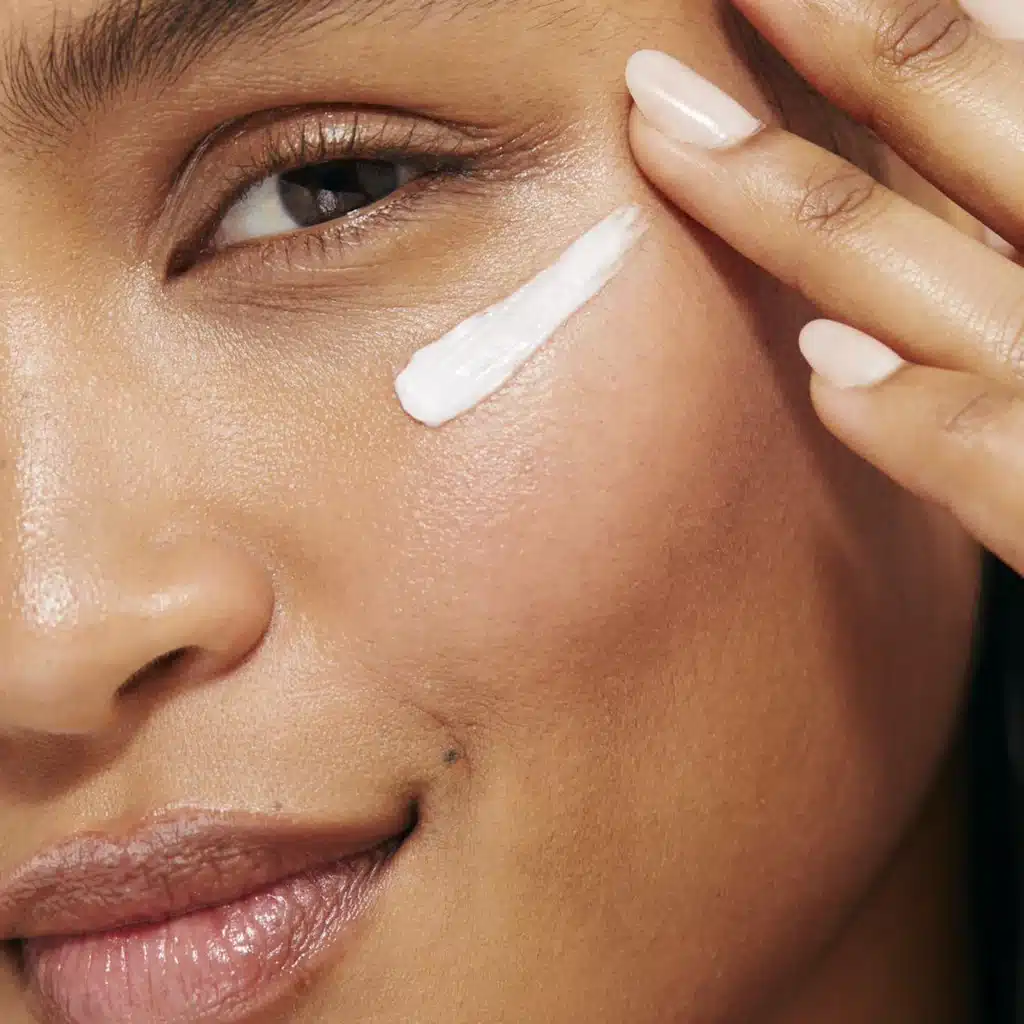
Eyelid eczema can be broadly grouped into two categories:
- Allergic contact dermatitis
- Irritant contact dermatitis
Allergic contact dermatitis
This occurs when the immune system reacts to a specific substance.
Common allergens include:
- Fragrance
- Preservatives
- Metals such as nickel
Reactions may appear hours or even days after exposure.
Irritant contact dermatitis
This results from repeated exposure to substances that damage the skin barrier.
Examples include:
- Frequent washing
- Harsh cleansers
- Environmental dryness
Understanding which type is more likely can help guide prevention strategies.
Why Eyelid Eczema Often Recurs
Many people experience repeated eyelid eczema flare-ups.
This happens because:
- The eyelids are constantly exposed.
- Triggers are difficult to avoid completely.
- The skin barrier takes time to fully recover.
Even when symptoms improve, the skin may remain vulnerable.
For this reason, ongoing gentle care is often necessary, even between flare-ups.
The Importance of Long-Term Barrier-Focused Skincare
Long-term management of eyelid eczema focuses less on “treating” and more on supporting the skin.
Barrier-focused skincare aims to:
- Reduce moisture loss
- Limit irritant penetration
- Improve skin resilience
Products that are designed for eczema-prone or sensitive skin are often prioritised, including those with minimal ingredient lists and fragrance-free formulations.
- Minimal ingredient lists
- Fragrance-free formulations
- Ingredients known for soothing and hydration
Individuals seeking gentle, barrier-supportive options without unnecessary additives sometimes choose brands like Bragan Skincare.
This mention is about suitability, not medical treatment.
Making Sense of Conflicting Advice
Online sources often expose people with eyelid eczema to conflicting advice.
Some sources promote:
- Frequent cleansing
- Active ingredients
- DIY remedies
Others recommend:
- Extreme avoidance
- Minimal product use
The most reliable approach usually sits in the middle.
Gentle cleansing, simple routines, and evidence-based guidance are more sustainable than extremes.
Eyelid Eczema and Quality of Life
Although eyelid eczema affects a small area of skin, its impact can be significant.
People may experience:
- Discomfort or itching
- Self-consciousness
- Anxiety about appearance
- Interrupted sleep
Recognising its impact is important.
Seeking help and adjusting routines is not overreacting — it is appropriate self-care.
Practical Questions to Ask Yourself
If eyelid eczema keeps returning, consider the following questions:
- Have I changed any products recently?
- Am I using fragrance anywhere near my face or hands?
- Do symptoms worsen during stress or seasonal changes?
- Am I introducing too many new products at once?
Answering these questions can help identify patterns.
Bringing the Focus Back to Gentle Care
Eyelid eczema management does not need to be complicated.
For many people, improvement comes from:
- Simplifying routines
- Reducing exposure to irritants
- Supporting the skin barrier consistently
Over time, this approach often leads to fewer flare-ups and better skin comfort.
How Eyelid Eczema Is Diagnosed
Often, eyelid eczema is diagnosed based on appearance and symptoms alone.
A healthcare professional will usually look at the skin and ask about recent exposures, products, and habits.
Because the eyelids are sensitive, doctors tend to take a cautious approach.
They may ask about:
- Skincare and cosmetic use
- Occupational exposures
- Hobbies involving chemicals or metals
- Personal or family history of eczema
A clear diagnosis helps avoid unnecessary treatments and reduces trial and error.
When Tests May Be Recommended
If eyelid eczema is persistent or keeps returning, further investigation may be needed.
This may include:
- Patch testing to identify allergens
- Review of skincare or cosmetic ingredients
- Referral to a dermatologist
Patch testing is especially useful when symptoms:
- Do not respond to standard care
- Flare without an obvious trigger
- Affect only the eyelids
Avoiding Over-Treatment
One common issue with eyelid eczema is over-treatment.
Because symptoms can be distressing, people may:
- Apply too many products
- Change routines frequently.
- Use treatments for too long
This can weaken the skin barrier further and prolong irritation.
A calmer, more consistent approach is often more effective.
Once eyelid eczema is identified, choosing a gentle, fragrance-free eyelid eczema cream designed for delicate skin can help support daily comfort and skin barrier repair.
The Importance of Patience With Eyelid Skin
Eyelid skin heals more slowly than other areas.
Even after symptoms improve, the barrier may remain fragile for some time.
This means:
- Improvements may be gradual.
- Flare-ups can happen during recovery
- Gentle care should continue even when skin looks better.
Patience plays an important role in long-term comfort.
Building Confidence in Your Skincare Choices
Managing eyelid eczema often involves rebuilding trust in skincare.
People may feel anxious about:
- Trying new products
- Reintroducing makeup
- Changing routines
Choosing products designed for sensitive or eczema-prone skin can help restore confidence.
For some individuals, fragrance-free brands such as Bragan Skincare are chosen because they focus on barrier support and minimal formulations, which can feel more reassuring when the skin is easily irritated.
Again, we should prioritise comfort and suitability over treatment claims.
Looking Ahead
For most people, eyelid eczema becomes easier to manage over time.
As triggers become clearer and routines stabilise, the management becomes easier.
- Flare-ups often become less frequent
- Symptoms may resolve more quickly.
- Confidence improves
Education and gentle care are key parts of this process.
Frequently Asked Questions About Eyelid Eczema
Is eyelid eczema contagious?
No.
Eyelid eczema is not contagious and cannot be passed from person to person through touch, sharing towels, or close contact.
It is an inflammatory skin condition linked to a weakened skin barrier and sensitivity to irritants or allergens.
Because of this, there is no risk of spreading eyelid eczema to family members, partners, or children.
Can eyelid eczema affect my eyesight?
Eyelid eczema itself does not usually affect eyesight.
However, symptoms such as swelling, redness, and irritation around the eyes can feel uncomfortable and may cause temporary sensitivity to light or watering of the eyes.
If you experience:
- Changes in vision
- Eye pain
- Discharge from the eye
You should seek medical advice, as these symptoms may indicate a different condition or infection.
What causes eyelid eczema to flare up suddenly?
Flare-ups often occur when the skin barrier is exposed to a new or increased trigger.
Common reasons for sudden flare-ups include:
- Introducing a new cosmetic or skincare product
- Exposure to fragrance or preservatives
- Seasonal changes, such as colder weather or pollen
- Increased stress or fatigue
Occasionally the trigger is indirect, such as hair or nail products transferring to the eyelids via the hands.
Can diet affect eyelid eczema?
Diet is not usually a direct cause of eyelid eczema.
For most people, eyelid eczema is driven by external irritants or allergens rather than food.
However, in a small number of individuals, food allergies or sensitivities may play a role, particularly if eczema is widespread or long-standing.
If you suspect a dietary link, it is best to seek professional advice rather than making major dietary changes on your own.
Should I stop wearing makeup if I have eyelid eczema?
During active flare-ups, avoiding makeup around the eyes is often helpful.
Makeup products can:
- Increase irritation
- Trap allergens against the skin
- Slow down skin recovery.
Once symptoms improve, makeup can usually be reintroduced gradually.
It is best to:
- Introduce one product at a time
- Choose fragrance-free options
- Stop using any product that causes stinging or redness.
Is eyelid eczema the same as blepharitis?
No, although they can look similar.
Blepharitis is a condition that mainly affects the eyelash margins and is often linked to inflammation of the oil glands.
Eyelid eczema affects the skin itself and is usually related to irritation, allergy, or barrier damage.
In some cases, both conditions can occur together, which is why professional assessment may be helpful if symptoms persist.
Can stress make eyelid eczema worse?
Yes.
While stress does not directly cause eyelid eczema, it can worsen symptoms and trigger flare-ups.
Stress can:
- Weaken the skin barrier
- Increase inflammation
- Make itching or rubbing more likely
Managing stress through good sleep, gentle routines, and realistic expectations can support overall skin health.
How long does eyelid eczema take to heal?
Healing time varies from person to person.
Mild flare-ups may improve within a few days once triggers are removed and gentle care begins.
More persistent cases may take several weeks to settle.
Because eyelid skin is thin and delicate, it often heals more slowly than other areas.
Continuing gentle care even after symptoms improve can help prevent recurrence.
Is it safe to use moisturiser on your eyelids?
Yes, provided the product is suitable for sensitive or eczema-prone skin.
A moisturising product used on the eyelids should, ideally, be:
- Fragrance-free
- Designed for sensitive skin
- Non-stinging
Using an appropriate emollient can help support the skin barrier and reduce dryness and irritation.
When should I see a doctor about eyelid eczema?
You should seek medical advice if:
- Symptoms are severe or painful
- The skin becomes infected or weepy.
- Symptoms keep returning despite gentle care
- Your vision is affected.
Early advice can prevent complications and help identify triggers more quickly.
Can eyelid eczema come back once it has cleared?
Yes.
Eyelid eczema can be a recurring condition, especially if triggers are reintroduced.
However, many people find that their flare-ups become less frequent and less severe.
- Less frequent
- Less severe
- Easier to manage
as they learn what their skin tolerates and maintain a consistent, gentle routine.
Is eyelid eczema common?
Yes.
Eyelid eczema is a common condition, particularly among people with sensitive skin, allergies, or a history of eczema elsewhere on the body.
Because the eyelids are exposed and highly sensitive, they are often one of the first areas to react when the skin barrier is compromised.
Let’s conclude with some words of reassurance.
Although eyelid eczema can feel worrying, it is usually manageable.
With the right understanding, trigger awareness, and gentle care, most people are able to keep symptoms under control and protect the delicate skin around the eyes.
If you’d like next, I can:
Long-Term Outlook
For most people, eyelid eczema is manageable.
With:
- Maintaining a high level of awareness about triggers is crucial.
- Gentle skincare
- Consistent routines
Symptoms often become less severe over time.
Bringing It All Together
Eyelid eczema can be uncomfortable and frustrating.
However, understanding the condition makes a real difference.
By focusing on:
- Barrier repair
- Trigger avoidance
- Gentle care
Many people find long-term relief.
For those seeking fragrance-free, barrier-supportive skincare designed for sensitive skin, brands such as Bragan Skincare may be worth exploring as part of a broader, non-aggressive care routine.