
Genital Eczema: Causes, Symptoms, and Treatment Options
Fast answer:
Genital eczema is a non-contagious inflammatory skin condition that affects the delicate skin of the genital area. It is not an STI. Symptoms may include itching, redness, dryness, and soreness. With the right care and treatment, most people are able to manage symptoms effectively.
Important reassurance
The condition is not a sexually transmitted infection (STI) and cannot be passed through sexual contact. Because symptoms can resemble fungal infections or other skin conditions, a proper diagnosis is important if symptoms persist or worsen.
For general medical guidance on eczema, the NHS explains symptoms, causes, and when to seek professional treatment.
What is genital eczema?
It is a form of dermatitis that affects the skin around the penis, scrotum, vulva, or surrounding genital area. The skin in this region is thinner and more sensitive, which can make flare-ups particularly uncomfortable.
Genital eczema can affect adults of all genders and may occur on its own or alongside other forms of eczema, such as atopic dermatitis.
Unlike thrush or other fungal infections, genital eczema is not caused by yeast or bacteria. Antifungal treatments will not resolve eczema-related inflammation and may sometimes worsen irritation by further drying or sensitising the skin.
Most people notice itching, soreness, or redness first — we cover symptoms next, followed by triggers and treatment options.
| Condition | Itch | Discharge | Contagious | Key Difference |
|---|---|---|---|---|
| Genital eczema | High | ❌ No | ❌ No | Dry, inflamed skin |
| Thrush | High | ✅ Often | ❌ No | White discharge |
| Psoriasis | Mild | ❌ No | ❌ No | Smooth red plaques |
| STIs | Variable | Sometimes | ✅ Yes | Systemic symptoms |
Types of genital eczema
Genital eczema is not a single condition. Instead, it describes several related forms of dermatitis that affect the genital area. Understanding the type involved can help guide treatment and long-term management.
Atopic genital eczema
This form occurs in people with a history of eczema, asthma, or hay fever. The skin barrier is naturally weaker, making the genital area more prone to dryness, itching, and inflammation.
Contact dermatitis (irritant or allergic)
This is one of the most common types. It develops when the skin reacts to soaps, shower gels, detergents, wipes, condoms, lubricants, or fragranced products. Irritant contact dermatitis is caused by repeated exposure, while allergic contact dermatitis involves a specific allergy. If you suspect irritation from products, your most practical next step is to review what to use and what to avoid in our guide on genital eczema cream for men.
Seborrhoeic overlap
In some cases, genital eczema overlaps with seborrhoeic dermatitis, particularly in warm, moist skin folds. This may cause redness, soreness, and flaking.
Lichenified eczema
Long-standing itching and scratching can cause the skin to thicken and become leathery. This is more common when symptoms have gone untreated for long periods.
If symptoms persist or repeatedly flare, a focused routine and the right product choices matter. You can also explore genital eczema treatment, barrier-supportive options.
Genital eczema vs other skin conditions
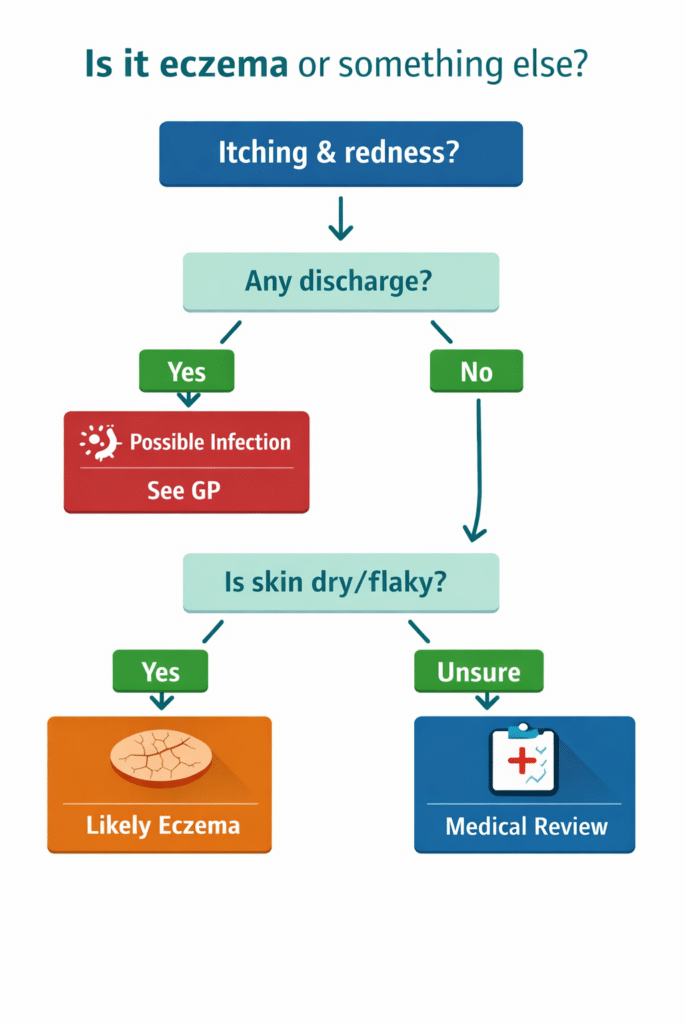
Genital eczema can resemble other skin conditions, which is why it often causes concern and confusion. Differentiating between these conditions is important to ensure appropriate treatment.
Genital eczema vs fungal infections (thrush)
Fungal infections often cause intense itching, redness, and soreness, but they may also produce discharge or a sharply defined rash. Eczema tends to cause dry, inflamed skin rather than discharge.
Genital eczema vs psoriasis
Genital psoriasis usually appears as smooth, well-defined red patches with little scaling. It may affect other areas such as the elbows, knees, or scalp at the same time.
Genital eczema vs STIs
Unlike sexually transmitted infections, genital eczema is not contagious. STIs may involve blisters, ulcers, pain during urination, or systemic symptoms such as fever.
Genital eczema vs other rashes
Heat rash, shaving irritation, and allergic reactions can all look similar in the early stages. If you’re unsure what’s driving symptoms, this guide on rash on private areas can help you compare common causes and next steps.
If symptoms don’t improve or keep returning, a GP or dermatologist can rule out infection and confirm the correct diagnosis.
Who is most likely to develop genital eczema?
The condition can affect anyone, but certain factors increase the likelihood of developing symptoms.
People with existing eczema or atopic conditions are at higher risk, as their skin barrier is more sensitive and reactive. This includes those with childhood eczema, asthma, or hay fever.
Individuals exposed to frequent moisture, sweat, or friction are also more susceptible. This includes athletes, people who wear tight clothing, or those in warm environments.
Those with sensitive skin or allergies may react to everyday products such as detergents, soaps, wipes, or personal care items. In that case, simplifying your routine and choosing gentle products can make a big difference. The following guide explores treatment options for genital eczema in more detail, including which creams are suitable and what to avoid. You can start here: best creams for treating genital eczema safely.
Stress and hormonal changes can also play a role. Stress may worsen inflammation, while hormonal shifts can affect skin sensitivity and barrier function.
When to seek medical advice urgently
Most cases of genital eczema are manageable, but getting the right diagnosis early can prevent unnecessary discomfort.
Seek medical advice urgently if:
- symptoms are severe, painful, or rapidly worsening
- the skin becomes oozing, bleeding, or crusted
- there are signs of infection, such as pus, increasing redness, warmth, or fever
- symptoms do not improve after 2–3 weeks of appropriate care
- there is uncertainty about whether the condition could be an infection or another skin disorder
If you’re uncertain whether you’re dealing with eczema or a different type of rash, this comparison guide on rashes on private areas can help you decide your next step.
And if you’ve already confirmed it’s eczema, follow a consistent barrier-focused plan (and avoid irritants).
Now that we’ve covered causes, risk factors, and when to seek help, here are the most common symptoms people experience.
Common symptoms of genital eczema
- Itching or burning sensation
- Redness or inflammation
- Dry, flaky, or cracked skin
- Soreness or sensitivity
For this reason, symptoms can vary in severity and may flare during periods of stress, sweating, or friction.
Compared to eczema on areas such as the arms or legs, genital eczema often feels more intense due to thinner skin, higher moisture levels, and constant friction. For this reason, symptoms may appear milder visually but feel significantly more uncomfortable.
Common causes and triggers
| Trigger | Likelihood | Severity Impact |
|---|---|---|
| Fragranced soaps | Very high | High |
| Tight clothing | High | Moderate |
| Sweating | High | Moderate |
| Stress | Moderate | Moderate |
| Detergents | High | High |
It is often triggered by a combination of skin sensitivity and external factors.
- Harsh soaps, body washes, or detergents
- Friction from tight clothing
- Sweating and heat
- Stress and hormonal changes
- Underlying eczema or allergic tendencies
Identifying and avoiding personal triggers is an important part of long-term management.
Because genital skin is thinner and more sensitive, and often exposed to moisture and friction, it reacts more quickly to irritants than skin elsewhere on the body. Even products that are well tolerated on the arms or legs can trigger inflammation in the genital area. Heat, sweating, and prolonged skin contact can further weaken the skin barrier, making flare-ups more frequent and more uncomfortable if triggers are not addressed.
While contact dermatitis is caused by direct exposure to a specific irritant or allergen, genital eczema often reflects an underlying skin barrier vulnerability. In many cases, both conditions can overlap, which makes identifying personal triggers essential.
How genital eczema is diagnosed
A GP or dermatologist can usually diagnose the condition based on a physical examination and medical history. In some cases, tests may be carried out to rule out fungal infections, psoriasis, or other skin conditions.
If symptoms are severe, painful, oozing, or not improving with basic care, medical assessment is recommended.
Genital psoriasis can look similar to eczema but is typically less itchy and more sharply defined. Because treatments differ, distinguishing between these conditions is important to avoid prolonged discomfort or ineffective care.
In some cases, patch testing may be used to identify contact allergies, particularly if symptoms repeatedly flare after exposure to soaps, detergents, or personal care products.
Treatment options for genital eczema
Treatment focuses on calming inflammation, repairing the skin barrier, and avoiding irritants. Options may include:
- Gentle, fragrance-free moisturisers
- Short-term topical steroids (under medical guidance)
- Non-steroidal soothing creams
- Lifestyle and skincare adjustments
Treatment plans are usually tailored to symptom severity and skin sensitivity. In mild cases, restoring the skin barrier with gentle, fragrance-free moisturisers may be enough to settle inflammation. More severe flare-ups may require short-term medical treatment, but long-term control focuses on consistent skincare, trigger avoidance, and protecting the skin from repeated irritation.
Open or irritated skin from scratching can become infected, causing further inflammation, pain, and discomfort.
Diagnosis also involves ruling out other conditions that can look similar, such as fungal infections, psoriasis, or contact dermatitis. Because genital eczema is not caused by infection, treatments aimed at thrush or STIs will not improve symptoms and may worsen irritation. This is why professional assessment is important when symptoms are persistent or unclear.
| Do | Don’t |
|---|---|
| Use fragrance-free, gentle cleansers or moisturisers | Use scented soaps, wipes, or shower gels |
| Wear loose, breathable cotton underwear | Wear tight or synthetic clothing that traps heat |
| Keep the area clean, dry, and gently moisturised | Overwash or scrub the skin |
| Apply creams with clean hands | Scratch irritated areas |
| Seek medical advice if symptoms persist | Assume symptoms are an infection without medical advice |
In-depth guides on genital eczema
These guides cover specific aspects of genital eczema in greater detail, including treatment choices, symptom differences, and care considerations.
Related guides
- Genital eczema cream for men: what works and what to avoid
- Best creams for treating genital eczema safely
- Rashes on private areas: causes and care
How genital eczema affects daily life
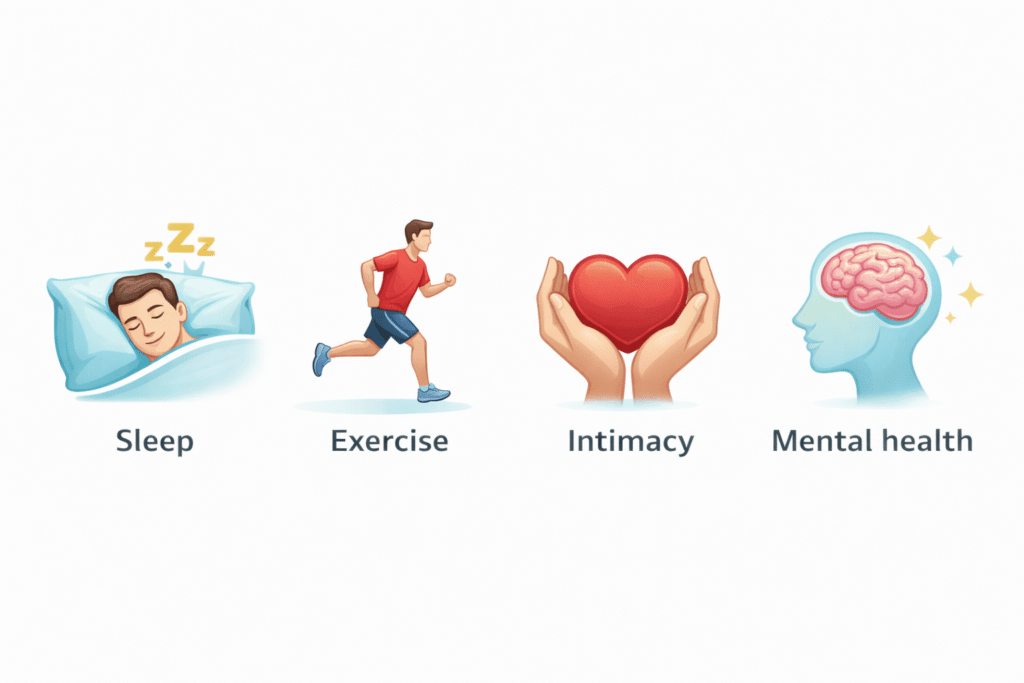
Living with genital eczema can affect far more than just the skin.
Persistent itching, soreness, or burning can interfere with sleep, concentration, exercise, and intimacy. Many people also experience anxiety or embarrassment, especially when symptoms flare unexpectedly.
Importantly, early recognition and gentle, consistent care often reduce flare-ups and help restore comfort and confidence over time.
Frequently Asked Questions About Genital Eczema
Is genital eczema an STI or STD?
No. Genital eczema is not an STI or STD and cannot be passed through sexual contact. It is an inflammatory skin condition linked to skin sensitivity and barrier disruption.
Is genital eczema contagious?
No. It is not contagious and cannot spread through touch or intimacy. It cannot be passed to a partner and is not caused by sexual activity.
What does genital eczema look like?
It may appear red, inflamed, dry, flaky, or irritated. Itching, burning, soreness, or cracking are common symptoms.
Can genital eczema be mistaken for thrush or an infection?
Yes. It can resemble fungal infections, psoriasis, or other skin conditions. Persistent or worsening symptoms should be checked by a GP or dermatologist.
Can stress cause genital eczema?
Stress does not directly cause eczema, but it can trigger or worsen flare-ups.
Can genital eczema come and go?
Yes. Symptoms often flare and settle over time, especially when triggers like friction, sweating, stress, or irritants are present.
Can I treat genital eczema at home?
Mild cases often improve with gentle, fragrance-free skincare and avoidance of irritants. Ongoing or severe symptoms need medical advice.
Are steroid creams safe for genital eczema?
Mild steroid creams may be used short-term if prescribed. Genital skin is delicate, so medical supervision is important.
What type of cream is best for genital eczema?
Choose fragrance-free, gentle creams that support the skin barrier. Avoid harsh, heavily fragranced, or drying products.
How long does genital eczema take to improve?
Many people see improvement within 1–3 weeks with consistent care. Recovery time depends on severity and trigger control.
When should I see a doctor?
See a doctor if symptoms are painful, oozing, bleeding, spreading, infected, or not improving after 2–3 weeks.