
Psoriasis is a chronic inflammatory skin condition that affects millions of people worldwide.
It causes red, scaly patches on the skin and often comes and goes in flare-ups.
Many people search for psoriasis to understand their symptoms, triggers, and treatment options.
While there is no cure, the condition can often be managed successfully with the right medical care and daily skin support.
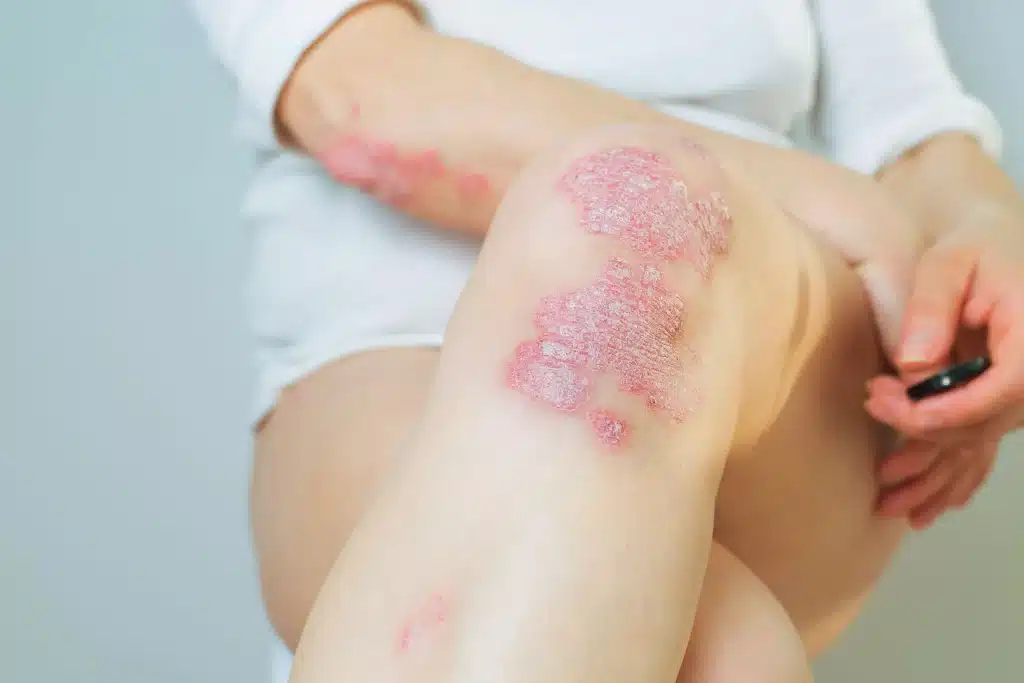

Fast answer
Psoriasis is a chronic inflammatory skin condition that causes red, scaly, and sometimes itchy or sore patches on the skin.While there is no cure, many people manage psoriasis successfully with the right knowledge, daily care, and gentle skin support.
This guide explains:
- What psoriasis is
- Why it develops
- How it affects the skin and joints
- And how to care for psoriasis-prone skin in a way that supports comfort and confidence
This content is informed by trusted sources including the NHS and dermatology research, alongside practical skin-care experience.
What Is Psoriasis? (Understanding the Condition)
Psoriasis is an immune-mediated inflammatory condition.
That means the immune system becomes overactive and speeds up skin cell turnover.
Normally, skin cells renew every 28–30 days.
With psoriasis, this process can happen in just a few days.
As a result:
- Skin cells build up on the surface
- Thickened patches form
- Redness, scaling, and irritation appear
Psoriasis is not contagious.
You cannot catch it or pass it on to others.
However, it is long-term.
For most people, psoriasis comes and goes in cycles, known as flare-ups and calmer periods.
You can read trusted medical guidance on psoriasis from the NHS here:
Common Types of Psoriasis


Psoriasis does not look the same for everyone.
There are several recognised types.
Plaque Psoriasis
This is the most common form.
It appears as:
- Raised red patches
- Silvery-white scales
- Dry or cracked skin
Plaque psoriasis often affects:
- Elbows
- Knees
- Lower back
- Scalp
Scalp Psoriasis
Scalp psoriasis affects the skin on the scalp and hairline.
Symptoms may include:
- Flaking that looks like dandruff
- Red or inflamed patches
- Itching or tightness
Scalp involvement can be frustrating.
However, gentle, non-irritating care can make a real difference.
Guttate Psoriasis
This type often appears suddenly.
It causes:
- Small, drop-shaped red spots
- Widespread patches on the body
Guttate psoriasis is more common in children and young adults.
It may be triggered by infections such as strep throat.
Nail Psoriasis
Psoriasis can also affect the nails.
Signs include:
- Pitting
- Thickened nails
- Discolouration
- Nails lifting from the nail bed
Nail changes are important.
They can sometimes be an early sign of joint involvement.
Psoriasis Symptoms to Watch For
Psoriasis symptoms vary from person to person.
They may also change over time.
Common symptoms include:
- Red, inflamed skin
- Dry or flaky patches
- Silvery or white scaling
- Itching or soreness
- Cracked skin that may bleed
Some people experience mild patches.
Others have more widespread or uncomfortable flare-ups.
If you are unsure whether your symptoms may be psoriasis, it can help to compare them with recognised warning signs.
You may find this guide useful: Psoriatic Arthritis Symptoms
What Causes Psoriasis?
There is no single cause of psoriasis.
Instead, it develops due to a combination of:
- Immune system activity
- Genetic factors
- Environmental triggers
Psoriasis often runs in families.
However, not everyone with a family history will develop it.
Common Psoriasis Triggers
Certain factors can trigger or worsen flare-ups.
These may include:
- Stress
- Cold or dry weather
- Skin injuries
- Infections
- Certain medications
Understanding your personal triggers can help reduce flare frequency.
Keeping the skin barrier healthy is also important.
When the skin is dry or damaged, symptoms often worsen.
Psoriasis and Joint Pain: An Important Link
For some people, psoriasis affects more than the skin.
Psoriasis can be associated with joint pain and stiffness.
This may be an early sign of psoriatic arthritis.
Joint symptoms can include:
- Morning stiffness
- Swollen fingers or toes
- Pain that improves with movement
If you notice joint discomfort alongside skin symptoms, further assessment is important.
You can explore this connection in more detail here:Psoriasis and Joint pain
Daily Skin Care for Psoriasis-Prone Skin (Supportive, Not Harsh)
There is no cure for psoriasis.
However, daily skin care plays a key role in managing symptoms.
Gentle routines help:
- Support the skin barrier
- Reduce dryness
- Improve comfort during flare-ups
Key principles include:
- Avoiding harsh soaps
- Using fragrance-free products
- Moisturising regularly
- Supporting, not stripping, the skin
Many people with psoriasis find that simple, consistent care works better than aggressive treatments.
A practical overview of gentle routines is available here: How to treat sensitive skin.
Where Bragan Skincare Fits In (Soft Introduction)
At Bragan Skincare, we work with psoriasis-prone and sensitive skin every day.
Our products are:
- Fragrance-free
- Designed to support the skin barrier
- Made for reactive, inflamed, or easily irritated skin
Rather than promising cures, our focus is on:
- Comfort
- Consistency
- Long-term skin support
Many people choose supportive creams as part of their daily psoriasis care routine, alongside medical advice where needed.

Atopic Cream 100ml
€59.99
Bragan Skincare Snail Mucin Atopic Cream
At Bragan Skincare, we believe in doing things differently. Our Snail Mucin Atopic Cream isn’t just another product on the shelf—it’s a promise to your skin. Powered by the unmatched healing properties of pure snail mucin, this cream is specially crafted to soothe redness, calm irritation, and restore balance to even the most sensitive skin. Perfect for those suffering with Eczema, Psoriasis. Dermatitis and many other skin condition.
Why snail mucin? Because it works. Packed with naturally occurring allantoin, glycolic acid, and peptides, it’s a game-changer for reducing redness, promoting repair, and deeply hydrating without fluff or false promises.
This isn’t about competing with the big brands. It’s about offering something real. Something different. Something that puts care back into skincare.
If you’re tired of products that overpromise and underdeliver, let our Snail Mucin Atopic Cream show you what’s possible when science and nature meet with intention. This is skincare that gets it. Skincare that gets you. This is skincare for you.
Together, let’s redefine what’s possible. Your skin deserves better. Here’s to a new burn-free, cheerful, and bright skin with Bragan skincare.
Psoriasis Flare-Ups: Why Symptoms Come and Go
Psoriasis rarely stays the same all the time.For most people, symptoms flare, settle, and then return again.
These flare-ups happen when inflammation increases in the body.
Understanding what triggers them can make psoriasis easier to manage.
Common Psoriasis Triggers
Triggers vary from person to person.
However, some are very common.
These include:
- Emotional or physical stress
- Cold or dry weather
- Skin injuries, cuts, or friction
- Infections
- Certain medications
Stress is one of the most reported triggers.
When stress levels rise, inflammation can rise too.
Cold weather can also worsen symptoms.
Dry air often increases itching, tightness, and scaling.
Why Gentle Skin Care Matters During Flare-Ups
During a flare, the skin barrier becomes weaker.
Moisture escapes more easily.
Irritants enter the skin more readily.
This is why harsh products often make psoriasis worse, not better.
Supportive skin care focuses on:
- Keeping moisture in
- Reducing irritation
- Avoiding unnecessary ingredients
Many people find that fragrance-free, non-foaming products are easier to tolerate during flare-ups.
You may find this guide helpful for building a gentle routine:Sensitive Skin
Psoriasis vs Eczema: What’s the Difference?
Psoriasis and eczema are often confused.
They can look similar, but they are not the same condition.
Key differences include:
Psoriasis
- Thicker, well-defined patches
- Silvery or white scaling
- Often affects elbows, knees, scalp
Eczema
- Softer, less defined patches
- More intense itching
- Often affects skin folds
Some people experience both conditions at different times.
This can make diagnosis confusing.
If symptoms are unclear or worsening, a GP or dermatologist can help clarify what’s happening.
Medical Treatment Options for Psoriasis
The right treatment depends on:
- Severity
- Location
- Impact on daily life
Common medical options include:
- Topical treatments
- Light therapy
- Systemic medications
Medical treatment aims to reduce inflammation and slow skin cell turnover.
For trusted clinical guidance, the NHS provides clear information here: Psoriasis Treatment
Supportive Skin Care Alongside Medical Treatment
Medical treatment addresses inflammation.
Daily skin care supports comfort.
Many people use supportive creams to:
- Reduce dryness
- Ease tightness
- Improve skin feel between treatments
This approach does not replace medical care.
Instead, it works alongside it.
At Bragan Skincare, our role is to support psoriasis-prone and sensitive skin with products designed to be:
- Fragrance-free
- Gentle
- Barrier-supportive
Psoriasis and Joint Involvement: What You Need to Know
For some people, psoriasis affects more than the skin.
It can also involve the joints, tendons, and connective tissue.
This link between skin symptoms and joint pain is important.
It is one of the reasons psoriasis should never be viewed as “just a skin condition”.
Can Psoriasis Cause Joint Pain?
Yes, it can.
Some people with psoriasis develop:
- Joint stiffness
- Swelling
- Pain that improves with movement
This may be a sign of psoriatic arthritis, an inflammatory joint condition linked to psoriasis.
Joint symptoms can appear:
- After years of skin symptoms
- At the same time as skin symptoms
- Or, in some cases, before psoriasis is clearly visible
Because of this, joint pain in people with psoriasis should not be ignored.
You can explore this connection in more detail here: Psoriasis and joint pain./
What Is Psoriatic Arthritis?
Psoriatic arthritis is a chronic inflammatory condition.
It affects joints, tendons, and sometimes the spine.
It develops when inflammation spreads beyond the skin.
Not everyone with psoriasis develops psoriatic arthritis.
However, the risk is higher in people with moderate to severe psoriasis.
A full, in-depth guide is available here: Psoriatic arthritis
Early Signs of Psoriatic Arthritis
Early symptoms are often subtle.
They are also easy to dismiss.
Common early signs include:
- Morning stiffness lasting more than 30 minutes
- Swollen fingers or toes
- Pain in the heels or soles of the feet
- Fatigue
- Reduced joint flexibility
Some people notice “sausage-like” swelling of fingers or toes.
This is known as dactylitis.
Others experience pain where tendons attach to bone.
This is called enthesitis.
Because symptoms can vary, diagnosis is sometimes delayed.
If you want a clearer breakdown of early warning signs, this guide may help: Psoriatic Arthritis Symptoms
Why Early Recognition Matters
Psoriatic arthritis is progressive.
Without treatment, inflammation can damage joints over time.
Early recognition allows:
- Faster diagnosis
- Earlier treatment
- Better long-term outcomes
Many people live well with psoriatic arthritis when it is managed early.
If you have psoriasis and joint symptoms, it is reasonable to discuss this with your GP or rheumatology team.
How Skin Care Fits In When Joints Are Affected
When joint symptoms appear, skin care still matters.
Inflammation affects the whole body.
During flare-ups, the skin barrier can become weaker.
Gentle skin support helps to:
- Reduce dryness and irritation
- Improve comfort during flares
- Support daily routines when mobility is limited
This is especially relevant when:
- Applying creams becomes uncomfortable
- Skin becomes sensitive during systemic treatment
Many people choose fragrance-free, barrier-supportive products as part of their daily care routine.
This does not replace medical treatment.
Instead, it supports skin comfort alongside it.
When to Seek Further Medical Advice
You should consider medical review if:
- Joint pain persists
- Stiffness lasts longer than expected
- Swelling affects fingers, toes, or larger joints
- Fatigue increases alongside skin symptoms
For trusted medical guidance, the NHS provides clear information on psoriatic arthritis here:
A Calm, Practical Approach
Living with the condition means paying attention to changes in the body.
That includes changes in the joints.
Early awareness leads to earlier support.
Earlier support leads to better outcomes.
Education, medical care, and gentle daily routines all play a role.
Daily Care for Psoriasis-Prone Skin
Daily skin care plays an important role in managing psoriasis.
While medical treatment addresses inflammation, routine care supports comfort and skin health.
The goal is not to “treat” psoriasis with cosmetics.
Instead, it is to support the skin barrier, reduce dryness, and improve day-to-day comfort.
A Simple Daily Routine That Works for Many People
Psoriasis-prone skin usually responds best to simple, consistent routines.
Key principles include:
- Avoid harsh soaps and detergents
- Choose fragrance-free products
- Moisturise regularly
- Be gentle with the skin
Consistency matters more than complexity.
During a Flare-Up
During flare-ups, the skin often feels:
- Tight
- Dry
- Irritated
- More sensitive than usual
At these times, it helps to:
- Reduce product use to the essentials
- Avoid exfoliation
- Apply moisturiser more frequently
- Pat the skin dry rather than rubbing
Supporting the skin barrier during flares may help reduce discomfort and cracking.
During Calmer Periods
When symptoms settle, daily care remains important.
Maintenance routines focus on:
- Keeping the skin hydrated
- Preventing dryness from returning
- Reducing irritation that may trigger new flares
Many people find that maintaining a gentle routine even when symptoms are calm helps extend symptom-free periods.
Where Supportive Skin Care Fits In
Supportive skin care does not replace medical treatment.
Instead, it complements it.
People with psoriasis often choose products that are:
- Fragrance-free
- Designed for sensitive skin
- Focused on barrier support
These products are typically used:
- Between medical treatments
- Alongside prescribed therapies
- As part of daily self-care
Bragan Skincare: A Supportive Option for Psoriasis-Prone Skin
At Bragan Skincare, our products are developed with sensitive and reactive skin in mind.
Our approach is simple:
- Support the skin barrier
- Avoid unnecessary ingredients
- Focus on comfort and consistency
We do not claim to cure the condition.
Instead, our products are designed to support skin that is dry, irritated, or easily upset, including skin affected by psoriasis.
Many people use supportive creams as part of their daily routine, alongside guidance from their GP or dermatologist.
When to Seek Medical Advice
Psoriasis should always be managed with medical guidance where needed.
You should consider speaking with a healthcare professional if:
- Symptoms worsen or spread
- Joint pain or stiffness develops
- Skin becomes painful, cracked, or infected
- Treatments are no longer effective
Trusted medical guidance is available from the NHS Psoriasis Conditions:
Frequently Asked Questions About Psoriasis
Is psoriasis an autoimmune condition?
Psoriasis is considered an immune-mediated inflammatory condition.
The immune system becomes overactive, leading to faster skin cell turnover.
Can psoriasis go away on its own?
The condition often comes and goes in cycles.
Symptoms may improve for long periods, but the condition itself is usually long-term.
Is psoriasis linked to joint pain?
Yes.
Some people will develop joint pain or stiffness, which may be a sign of psoriatic arthritis.
Does moisturising really help psoriasis?
Moisturising does not cure it.
However, it can help reduce dryness, improve comfort, and support the skin barrier.
Should I avoid fragranced products?
Many people with psoriasis find fragrance irritating.
Fragrance-free products are often better tolerated, especially during flare-ups.
Final Thoughts
Psoriasis is a complex condition that affects both the skin and, for some people, the joints.
Education, medical care, and daily routines all play a role.
With the right support, many people manage psoriasis successfully and live well.